
Quick Summary
Sewage backups introduce dangerous Category 3 biohazard contamination and structural moisture damage that require immediate professional containment, wastewater extraction, and sanitization. Hiring a certified sewage damage restoration company like Floodline Restoration Co. ensures rapid 45-minute emergency response to halt biohazards, safely remove contaminated materials, and provide comprehensive insurance claim documentation. Readers will understand the core stages of hazardous waste remediation and can call Floodline Restoration Co.'s 24/7 live dispatch line for immediate sewage extraction and a free on-site visual inspection.
Sewage Damage Restoration Company: Emergency Cleanup Considerations
Sewage-contaminated water may contain harmful pathogens and should not be contacted unnecessarily. Occupants and pets should avoid affected areas, and cleanup should begin as soon as possible after the backup is stopped. Hiring a professional sewage damage restoration company like Floodline Restoration Co. can help ensure that contaminated water is extracted safely, affected surfaces are cleaned and disinfected, and the property is dried.[3]
Flooding and extreme rainfall can overwhelm drainage and wastewater infrastructure, allowing sewage-contaminated water to enter buildings.[2]
Emergency Sewage Cleanup: Key Response Priorities
Emergency Sewage Cleanup Overview: Professional remediation generally focuses on containing contamination, extracting wastewater, removing unsalvageable porous materials, cleaning and disinfecting affected surfaces, and drying the structure.
Sewage-contaminated water may contain harmful pathogens, and occupants and pets should avoid affected areas. Cleanup should begin as soon as possible after the backup is stopped. Professional contractors isolate affected areas to manage contamination during the extraction and drying process.[4]
Remediation in Attached Homes and Multi-Unit Buildings
In attached homes and multi-unit buildings, remediation practices may vary depending on the site and contractor. Contaminated water and moisture can affect shared walls or adjacent spaces, so contractors typically focus on removing standing water, discarding unsalvageable materials, and cleaning and disinfecting surfaces before setting up drying equipment.[5]
Core Steps in Biohazard Remediation
Restoration contractors like Floodline Restoration Co. generally follow structured steps to remediate contaminated properties:
- Containment: Isolating the affected area to help prevent the spread of contamination.
- Wastewater Extraction: Removing standing water and solid waste from the property.
- Removal of Porous Items: Removing unsalvageable porous materials, such as saturated drywall, insulation, and carpeting.
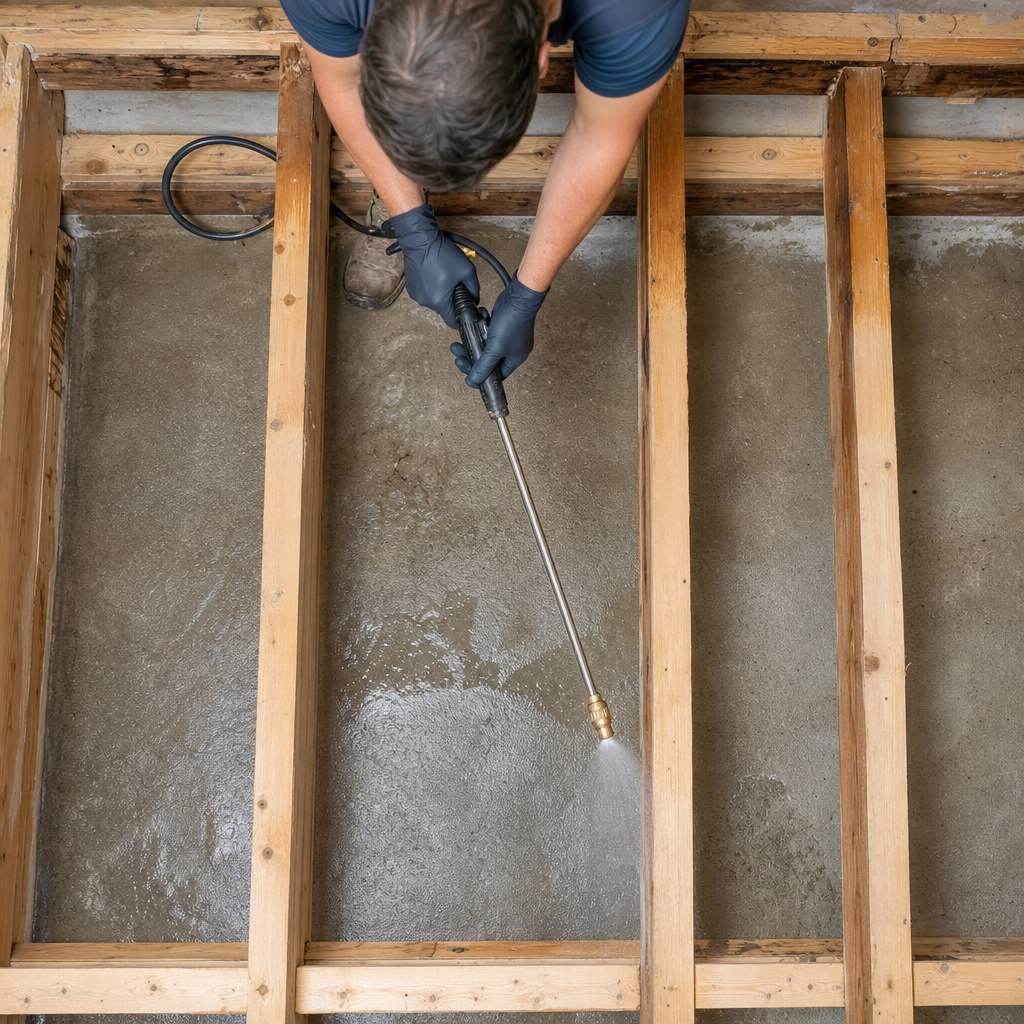
- Cleaning and Disinfection: Cleaning and disinfecting salvageable structural surfaces.
- Drying and Dehumidification: Using drying equipment to remove moisture from structural components.
What Does Sewage Damage Restoration Cost?
Costs for professional sewage cleanup vary based on the extent of contamination, affected materials, severity of the damage, and required repairs. According to Floodline Restoration Co., an on-site assessment is needed to determine the scope of work and provide an accurate cost estimate.
Navigating Insurance Coverage
Standard homeowners policies typically do not cover sewer backups unless specific coverage or an endorsement has been added. When navigating a potential claim, documentation is often recommended:
- Take photos and videos of the damage before cleanup or removal of materials begins.
- Keep detailed records and itemized scopes of work provided by the restoration contractor.
- Contact your insurance carrier promptly to verify policy terms, deductibles, and endorsement requirements.
Special Considerations for Multi-Family and Attached Properties
Need sewage damage restoration company?
We’re available now - call for a fast, free estimate.
Attached structures and multi-family properties may present additional considerations due to shared walls, plumbing stacks, or crawl spaces. Inspection and drying practices may vary by site and contractor, but evaluating shared boundaries can help ensure that moisture and contamination do not spread to adjacent areas.
Restoring Contaminated Building Materials
As noted by Floodline Restoration Co., restoration requires distinguishing between porous, semi-porous, and non-porous building components.
Drywall, Insulation, and Soft Goods
Porous materials exposed to sewage cannot typically be fully disinfected. Saturated drywall, insulation, and padded carpeting generally must be removed and disposed of.
Concrete, Masonry, and Structural Framing
Non-porous and semi-porous structural components like concrete, masonry, and structural framing can often be cleaned, disinfected, and dried.
Questions to Ask a Sewage Damage Restoration Company
When choosing a contractor for sewage remediation, consumers may want to ask prospective contractors several questions:
- What industry certifications and training do your technicians hold?
- What type of insurance coverage, such as liability insurance, does your company carry?
- How do you handle staffing, emergency response, and dispatch?
- Do you perform an on-site assessment and provide an itemized estimate?
- How do you coordinate documentation and estimates for insurance claims?
Frequently Asked Questions About Sewage Cleanup
How quickly should professional sewage cleanup begin after a backup?
Cleanup should begin as soon as possible after the backup is stopped to minimize damage and reduce health risks from contaminated water.
Is it safe to stay in a home with sewage damage?
Sewage-contaminated water may contain harmful pathogens and should not be contacted unnecessarily. Occupants and pets should avoid affected areas until proper cleanup, disinfection, and drying are completed.
How is the affected area cleaned and sanitized?
Restoration generally involves extracting standing water, removing unsalvageable porous materials, washing and disinfecting salvageable surfaces, and thoroughly drying the space.
Does homeowners insurance cover sewage backup and restoration?
Standard homeowners policies typically do not cover sewer backups unless specific coverage or an endorsement has been added. Contact your insurance provider to review your policy details and endorsement options.
If you are dealing with a sewer backup or contaminated water, professionals at Floodline Restoration Co. advise that occupants and pets should avoid affected areas, and cleanup should begin as soon as possible after the backup is stopped.[1]
Need sewage damage restoration company?
We’re available now - call for a fast, free estimate.
Sources
- Assessing the U.S. Temperature and Precipitation Analysis in … – ncei.noaa.gov (2025)
- [PDF] Report on the Camp Mystic Flood Disaster of July 4, 2025 – house.texas.gov (2025)
- Assessing the U.S. Climate in 2024 | News – ncei.noaa.gov (2024)
- A.25-03-010, et al. Exhibit EDF-01 Attachment B-25 – docs.cpuc.ca.gov (2024)
- What live sewage spill data does (and doesn't) tell us about … – phys.org (2025)
Frequently Asked Questions
What should I do immediately while waiting for emergency sewage extraction?
Avoid entering the affected area to prevent pathogen exposure, and shut off your main water supply if it is safe to access. Contact Floodline Restoration Co.'s 24/7 live dispatch team, which provides a 45-minute emergency response to halt Category 3 biohazard spread and perform a free on-site visual inspection.
How does a sewage damage restoration company assist with the insurance claim process?
Professional contractors record extensive photo and video evidence, map moisture migration, and draft itemized loss inventories for your adjuster. Floodline Restoration Co. works directly with your insurance carrier to provide comprehensive documentation required under sewer backup riders and endorsements.
Can structural framing and personal belongings exposed to sewage be saved?
Porous materials like upholstered furniture, carpet padding, and saturated drywall cannot be fully sanitized and require hazardous waste disposal. Non-porous and semi-porous structural components, such as concrete foundations and wood framing, can typically be disinfected, dried, and salvaged by Floodline Restoration Co.
About the author
 |
Sarah Miller Sarah Miller is a certified water damage restoration specialist with over eight years of experience serving the Canarsie, NY area. Holding a degree in Environmental Science from Brooklyn College, she specializes in emergency response protocols and navigating complex insurance claims for both residential and commercial properties. Her practical expertise helps property owners understand the nuances of restoration costs and effective prevention strategies. |
Water damage, flood, or mold emergency?
We’re available now - call for a fast, free estimate.
Call Now - Free Estimate