
Quick Summary
Addressing indoor fungal contamination requires a structured mold remediation process that resolves hidden moisture sources, establishes certified containment, and safely removes compromised building materials. Floodline Restoration Co. manages every phase of the project in-house without relying on subcontractors, delivering HEPA air filtration, structural drying, antimicrobial treatment, and full reconstruction to prevent recurrence. Property owners can call the 24/7 live dispatch line to schedule a free visual inspection and professional moisture assessment to ensure their building is thoroughly remediated.
Mold Remediation Process: Steps, Safety, and Timelines
When standing water from a burst pipe, a storm surge, or a slow plumbing leak enters a building, mold can begin growing on damp surfaces. A proper mold remediation process does not stop at wiping down visible discoloration. It addresses moisture sources, contains contaminated areas, cleans or removes affected materials, dries the structure, and works to prevent recurrence.[5]
Remediation timelines vary depending on the extent of mold growth, the severity of water damage, the types of materials affected, the presence of hidden mold, and the need for structural repairs. For example, localized surface cleaning in an isolated room might take a few days, whereas extensive water intrusion or flood recovery across multiple levels can take several weeks or longer. See also Mold Remediation – Call Now-10% Off – Same-Day Service – Free Estimate.
Mold Removal vs. Mold Remediation
Property owners often hear the terms “mold removal” and “mold remediation” used interchangeably, but they represent different concepts:
- Mold Removal: An inaccurate industry phrase. Mold spores exist naturally in indoor and outdoor air, and attempting to completely eliminate all mold spores is physically impossible. Furthermore, spraying bleach or store-bought biocides onto surface mold merely masks surface discoloration without addressing the underlying moisture problem.
- Mold Remediation: A systematic process designed to address moisture sources, clean or remove contaminated materials, dry affected areas, and prevent recurrence as reasonably as possible.
Attached Housing Considerations
Need mold remediation process?
We’re available now - call for a fast, free estimate.
In attached structures such as rowhouses, semi-detached homes, or multi-family buildings that share common walls, moisture and air movement between units may present additional challenges. Shared wall cavities, joist pockets, and structural pathways can allow moisture or airborne particles to travel between adjoining spaces. In these environments, remediation planning by specialists such as Floodline Restoration Co. often involves assessing shared boundaries, isolating the workspace, and controlling airflow to minimize the potential spread of dust and particles to neighboring units.[4]
Health Impacts and Remediation Outcomes
The Institute of Medicine found sufficient evidence linking indoor mold exposure with upper-respiratory symptoms, cough, wheeze, asthma symptoms in people with asthma, and hypersensitivity pneumonitis in susceptible individuals.[1]
Public health data shows the scope of indoor dampness issues. In a CDC study of indoor mold exposure diagnoses, prevalence was 3.5 per 10,000 enrollees among 31,119,694 commercial-insurance outpatients and 8.5 per 10,000 among 9,334,643 Medicaid outpatients. Furthermore, CDC research found that remediation outcomes can differ by symptom type: some non-respiratory symptoms improved over time, while respiratory symptoms did not consistently improve and in some analyses worsened.[2]
A CDC review reported that a Swedish school study found lower respiratory symptoms among staff seven months after remediation, and another intervention study found significantly fewer symptomatic days per month in the remediation group during the tenth and twelfth months. In a CDC-reviewed pediatric housing intervention, acute care visits for asthma occurred in 4% of children in the remediation group compared to 33% in the control group.[3]
The General Mold Remediation Framework
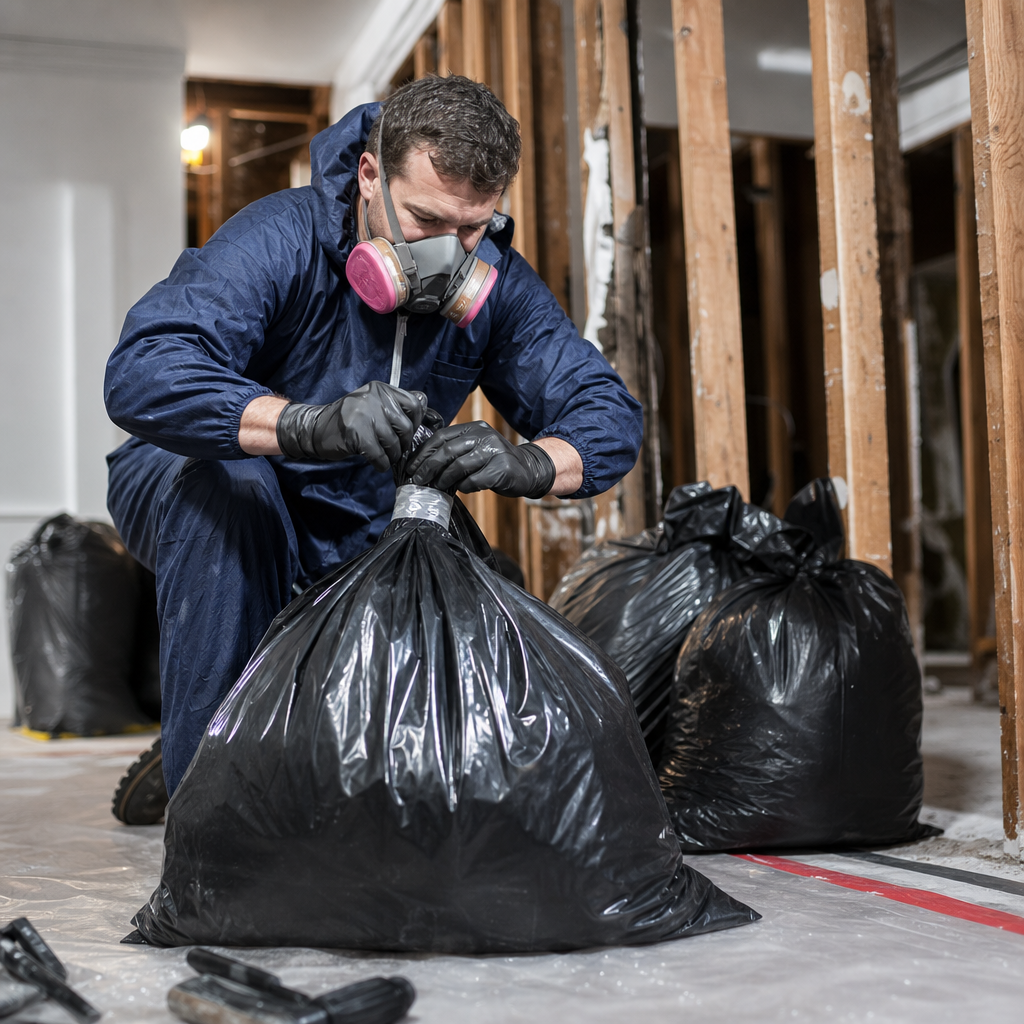
The CDC describes home mold remediation measures studied in the literature as including mold removal from hard surfaces, elimination of rainwater intrusion, installation of ventilation to exhaust water vapor from kitchens and bathrooms, and repair of plumbing leaks. In practice, remediation projects generally follow a structured framework to address moisture and contamination:
Moisture Assessment and Source Correction
According to protocols followed by Floodline Restoration Co., remediation begins by locating active water intrusion sources and identifying damp building materials. Technicians use tools such as moisture meters, thermo-hygrometers, or infrared cameras to discover trapped dampness behind wall assemblies or flooring. Correcting the water source is essential before or alongside cleanup.
Isolation and Containment
Before demolition or disturbance begins, technicians often isolate the work area to help prevent the spread of dust and mold spores. Containment may include plastic sheeting over doorways and openings, sealing ventilation registers within the work zone, and establishing negative airflow using filtered air equipment where appropriate.
Air Filtration and Environmental Stabilization
Technicians use HEPA air filtration devices to filter airborne particles from the workspace. Dehumidifiers are also operated to reduce humidity and facilitate drying throughout the remediation area.
Cleaning and Controlled Removal of Porous Materials
As professionals at Floodline Restoration Co. observe, materials that are heavily water-damaged or extensively colonized may need to be removed, while salvageable components are cleaned:
- Drywall and Insulation: Saturated drywall and compromised insulation that cannot be properly dried are typically cut away, removed, and discarded. If hidden mold is discovered during removal, the scope of work is reevaluated.
- Flooring: Severely waterlogged carpet padding, delaminated laminate, or damaged subflooring may be removed to allow access to trapped moisture.
- Disposal: Removed materials are bagged or sealed before being transported out of the containment zone to prevent cross-contamination.
Structural Cleaning and Antimicrobial Treatment
Non-porous and semi-porous structural elements such as wood framing, subfloors, and concrete walls are cleaned and treated:
- HEPA Vacuuming: Exposed structural elements are vacuumed to remove settled debris and fungal particles.
- Surface Cleaning: Abrasive cleaning methods (such as sanding or wire brushing) and damp wiping with appropriate cleaning solutions are used on affected surfaces.
- Encapsulation: When appropriate, a mold-resistant sealant may be applied to bare framing to help protect surfaces against future moisture fluctuations.
Structural Drying and Post-Remediation Verification
The final phase ensures building materials are completely dry before reconstruction begins:
- Drying Verification: Technicians take moisture readings to ensure structural framing and assemblies have reached acceptable drying goals.
- Visual Inspection: The site is checked to ensure no residual dust, debris, or dampness remains.
- Clearance Assessment: Post-remediation verification may include visual evaluation, moisture assessment, and environmental sampling to confirm that the work area is clean and dry.
Structural Considerations: Drywall, Basements, and Framing
Need mold remediation process?
We’re available now - call for a fast, free estimate.
Different areas of a building present unique remediation requirements:
- Drywall and Ceilings: Gypsum drywall contains paper facing, which can support mold growth when wet. Saturated drywall often loses structural integrity and typically requires removal rather than drying in place.
- Basement Foundations and Sill Plates: As noted by Floodline Restoration Co., low-lying basement walls and mudsills are vulnerable to ground seepage and storm runoff. Concrete surfaces can often be washed and dried, while wood sill plates sitting directly on masonry may require thorough cleaning, antimicrobial treatment, and extended drying times.
- Floor Joists and Subflooring: Solid dimensional timber joists can often be cleaned, vacuumed, and dried in place. In contrast, engineered subflooring such as OSB or particleboard may swell significantly when soaked and frequently requires removal if damaged or if moisture remains trapped underneath.
Factors That Influence Remediation Cost and Timelines
No two water damage situations are identical. The overall duration and investment required for a remediation project depend on practical variables:
- Extent of Mold and Colonization Depth: An isolated patch of surface growth requires less labor and containment than widespread mold affecting large structural assemblies.
- Moisture Source and Water Category: Clean water from a supply line dries faster and typically requires less demolition than contaminated water from a storm surge or sewer backup.
- Accessibility of Cavities and Hidden Mold: Mold hidden inside ductwork, behind tiled shower walls, or within crawlspaces requires extra labor to access and clean, and may require reevaluation of the project scope.
- Drying Complexity: Dense structural timbers, multi-layered subfloors, and masonry assemblies take longer to dry than open residential rooms.
- Reconstruction Scope: Replacing insulation, hanging new drywall, painting, and rebuilding finished carpentry follow the remediation and drying steps.
Frequently Asked Questions
What are the standard steps in the professional mold remediation process?
As outlined by Floodline Restoration Co., the remediation framework generally involves moisture assessment and source correction, containment setup, air filtration, cleaning or removal of contaminated materials, structural drying, and verification that affected areas are clean and dry. If hidden mold is discovered during the process, containment and remediation steps are reevaluated.
How long does the mold remediation process usually take?
Timelines vary depending on mold extent, water damage severity, affected materials, hidden mold, and structural repairs. For example, localized cleaning in an isolated area might take two to five days, whereas severe water intrusion or multi-room remediation can take one to two weeks or longer before reconstruction can begin.
Can you stay inside the house during mold remediation?
If the affected area is small, isolated from main living spaces (such as an exterior utility shed or a closed-off bathroom), and sealed under proper negative air pressure, you can often remain in the home. However, if the project involves central HVAC ductwork, high contamination levels, or main living areas, temporary relocation is recommended to avoid exposure to construction noise and disturbed air particles.
What is the difference between mold removal and mold remediation?
Mold removal implies eliminating all fungal spores, which is impossible because mold exists naturally in every environment. Mold remediation is a process that addresses the source of moisture, cleans or removes contaminated materials, dries affected areas, and works to prevent recurrence as reasonably as possible.
How do restoration specialists prevent mold spores from spreading during removal?
Technicians use physical containment barriers made of plastic sheeting, seal HVAC supply and return registers, and run air scrubbers equipped with HEPA filters. By venting filtered air to manage airflow, they create negative pressure so that airborne dust and spores are pulled into the filtration system rather than escaping into unaffected areas.
How do professionals verify that mold remediation was successful?
Verification is conducted through visual inspections to ensure no dust, debris, or visible mold remains, moisture testing to confirm that framing and other building materials are dry, and verification that moisture intrusion sources have been corrected. Independent environmental testing may also be performed when required.
Need mold remediation process?
We’re available now - call for a fast, free estimate.
Sources
- Meta-analyses of the associations of respiratory health effects with … – pubmed.ncbi.nlm.nih.gov (2007)
- Indoor dampness and mould health effects – PMC – NIH – pmc.ncbi.nlm.nih.gov (2011)
- 2018/01/01 – CDC Stacks – stacks.cdc.gov (2018)
- Healthy Housing – ncbi.nlm.nih.gov (2011)
- Changes in health symptoms among occupants during and … – stacks.cdc.gov
Related reading: How Long Does Mold Remediation Take | Call Now-10% Off | Same-Day Service | Free Estimate
Related reading: Sewage Backup Cleanup | 10% Off & Free Estimate | Same-Day Service
Related reading: Mold Remediation Cost – 10% Off & Free Estimate – Same-Day Service
Frequently Asked Questions
What happens if hidden mold is discovered inside wall cavities during the remediation process?
When concealed mold is uncovered behind drywall or under subflooring, technicians immediately adjust the project scope and expand containment to prevent spore migration. Floodline Restoration Co. handles these structural discoveries in-house without relying on subcontractors, applying targeted HEPA filtration and antimicrobial treatments to newly exposed framing. Property owners can call the 24/7 live dispatch line to schedule a free visual inspection and professional moisture assessment.
Does the mold remediation process include rebuilding damaged walls and flooring?
Remediation covers containment, removal of contaminated porous materials, antimicrobial cleaning, and deep structural drying, while full recovery requires rebuilding the removed components. Floodline Restoration Co. provides seamless end-to-end service by handling both certified extraction and full structural reconstruction under one roof. This integrated approach ensures new drywall and flooring are only installed once strict drying goals are verified.
How do technicians confirm a building is completely ready for reconstruction after mold cleanup?
Clearance requires thorough visual inspection, particulate assessment, and calibrated moisture meter testing to verify that framing timbers have returned to safe moisture levels. Floodline Restoration Co. conducts rigorous post-remediation verification before applying mold-resistant sealants and starting structural repairs. You can contact their 24/7 dispatch line anytime to arrange a certified moisture assessment.
About the author
 |
Marcus Thorne Marcus Thorne is a certified restoration specialist with over a decade of hands-on experience in emergency water and mold mitigation. Drawing on a background in construction management from the New York Institute of Technology, he translates complex restoration procedures into actionable advice for property owners navigating unexpected damage. |
Water damage, flood, or mold emergency?
We’re available now - call for a fast, free estimate.
Call Now - Free Estimate