
Quick Summary
Addressing moisture intrusion and fungal contamination in Canarsie properties requires technical mold remediation rather than cosmetic cleaning to safeguard indoor air quality and prevent long-term structural decay. Floodline Restoration Co. permanently eliminates environmental hazards by applying IICRC-certified AMRT protocols, strict negative air containment, structural drying, and seamless in-house reconstruction without relying on subcontractors. Readers will understand the full cleanup process and can contact the Floodline Restoration Co. 24/7 live dispatch team to book a free visual inspection and immediate mold containment assessment.
Mold Remediation in Canarsie, NY: Moisture Control and Cleanup Guidance
Moisture problems can occur in homes and commercial buildings in Canarsie and require site-specific assessment. Addressing moisture issues promptly is important to protect the structure and indoor environment.[5]
Exposure to damp and moldy environments can cause symptoms such as nasal stuffiness, throat irritation, coughing or wheezing, eye irritation, or skin irritation. Some people have no health effects, while people with asthma, mold allergies, weakened immune systems, or chronic lung disease may face greater risks.
As outlined by specialists like Floodline Restoration Co., mold remediation generally involves addressing the moisture source, cleaning or removing affected materials, drying the building, and preventing recurrence.
What to Expect from Professional Mold Remediation in Canarsie
What to Expect in brief: Mold remediation generally involves identifying and fixing the moisture source, cleaning or removing affected materials, thoroughly drying the area, and taking steps to prevent recurrence.
Immediate Action vs. Cosmetic Cleaning
Cleanup methods depend on the extent of contamination and should account for health and injury risks. The CDC recommends drying wet materials and surfaces within 24 to 48 hours when possible.
Moisture problems can occur in various building types and require site-specific assessment and proper drying rather than cosmetic cover-ups.
Understanding Negative Air Containment and Microbial Safety
Cleanup methods depend on the extent of contamination and should account for potential health and injury risks during the remediation process:
- Containment: Isolation methods may be used to help limit the spread of dust and debris to unaffected areas.
- Air Filtration: Air filtration equipment may be used during remediation to capture airborne particles.
- Material Removal and Cleaning: Damaged porous materials are removed, and salvageable structural elements are cleaned and dried.
Emergency Water Damage Restoration
When water enters a building, prompt drying should begin to address moisture and protect materials.
Rapid Water Extraction and Cavity Drying
Water can spread through building materials and assemblies. Water extraction and thorough drying are important steps to manage moisture intrusion.
Preventing Secondary Microbial Spread
Drying wet materials and surfaces within 24 to 48 hours when possible helps manage moisture. According to technical standards followed by Floodline Restoration Co., dehumidification and moisture assessment help ensure structural elements are properly dried.
Flood Damage Restoration and Storm Surge Recovery
Flooding and storm water intrusion can introduce significant moisture into residential and commercial buildings, requiring prompt assessment and cleanup.
Managing Storm Water Intrusion
Storm water can damage porous materials such as drywall and insulation. Damaged materials are typically removed to allow structural framing to be thoroughly cleaned and dried.
Sanitation and HEPA Cleaning Protocols
The CDC advises using wet mops or vacuums equipped with HEPA filters rather than dry sweeping when cleaning mold-contaminated dust. Framing and other structural materials must be thoroughly cleaned and dried.[3]
Mold Remediation Process Step-by-Step
Process in brief: Remediation generally involves assessing the moisture source and damage, establishing appropriate containment, removing damaged materials, cleaning and drying affected areas, and preventing recurrence.
Whether dealing with localized moisture or widespread contamination, teams such as Floodline Restoration Co. emphasize that a structured remediation process involves several key steps:
- Assessment: Identifying the source and extent of moisture intrusion and affected materials through site-specific evaluation.
- Containment: Using appropriate containment methods to limit dust and debris based on the extent of contamination.
- Air Quality Management: Using air filtration as appropriate during cleanup and material handling.
- Material Removal: Removing water-damaged porous materials that cannot be effectively cleaned or dried.
- Cleaning: Cleaning affected surfaces using appropriate methods such as HEPA-filtered vacuums and wet cleaning rather than dry sweeping.
- Drying: Thoroughly drying the building and addressing the moisture source to help prevent recurrence.
Wastewater and Contaminated Water Cleanup
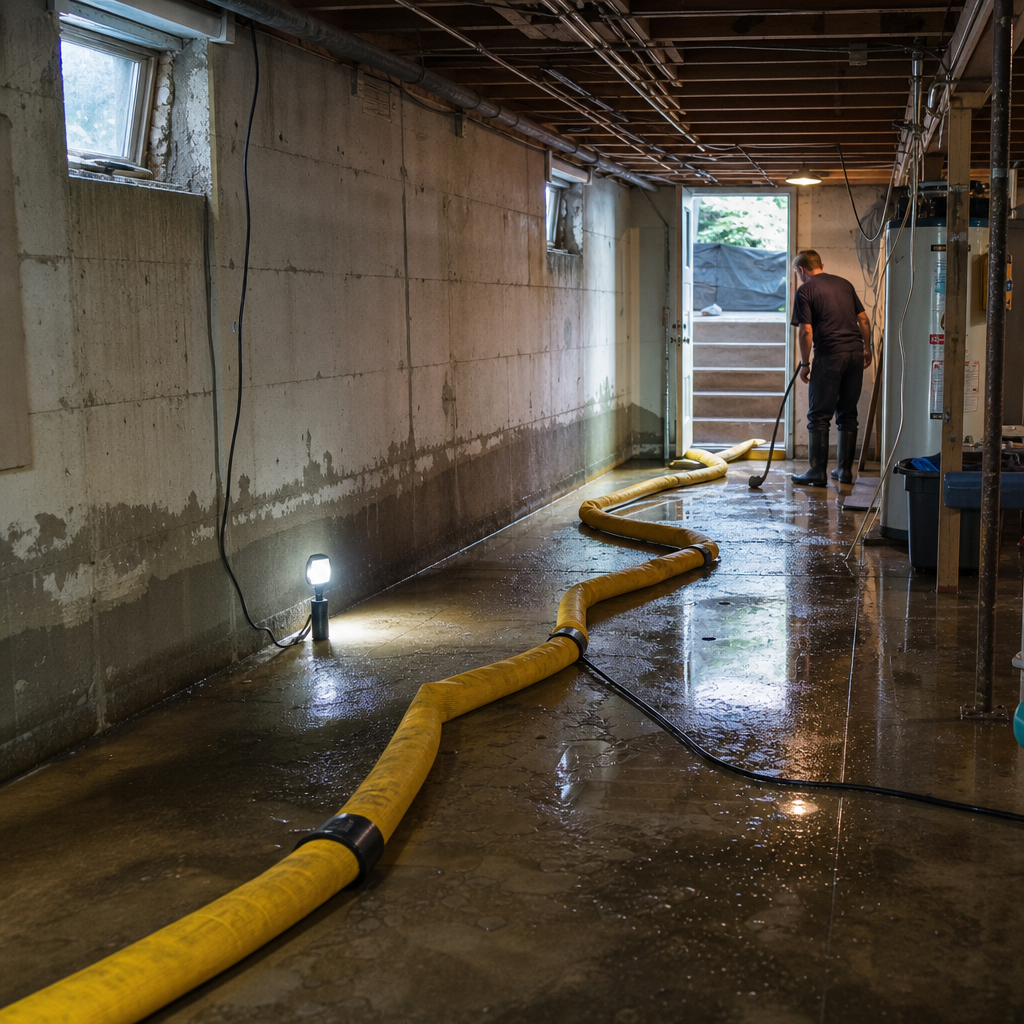
Wastewater and drain backups introduce contaminated water into buildings, requiring careful cleanup and safety precautions.[1]
Contaminated Material Extraction
Cleanup methods depend on the extent of contamination and should account for health and injury risks. Appropriate protective gear should be worn when handling contaminated materials, and damaged items should be removed and disposed of properly.
Decontamination for Living Spaces
Affected surfaces must be thoroughly cleaned, sanitized, and dried, and the underlying cause of the water intrusion must be corrected.
Burst and Frozen Pipe Water Damage Cleanup
During freezing weather, broken or burst pipes can release significant amounts of water inside walls and living spaces.
Locating Concealed Plumbing Failures
Plumbing leaks behind walls or ceilings require locating the source of the water, inspecting surrounding assemblies, and assessing the full extent of moisture spread.
Structural Drying
Proper drying of affected structural components is necessary to manage moisture and prevent ongoing dampness.
Basement Mold Remediation and Foundation Recovery
Basements can be susceptible to moisture intrusion and elevated humidity from foundation seepage and water leaks.
Sub-Grade Moisture Mitigation
In the experience of Floodline Restoration Co., basement remediation involves identifying and correcting moisture sources, cleaning or removing affected materials, and drying the space thoroughly to prevent recurrence.
Attic Mold Remediation and Roof Leaks
Roof leaks or inadequate ventilation can lead to moisture accumulation in attic spaces, affecting insulation and framing.
Upper-Level Moisture Extraction and Remediation
Attic remediation involves addressing the source of moisture, removing damp insulation and damaged materials, cleaning affected wood surfaces, and properly drying the area.
What Does Mold Remediation Cost?
Mold Remediation Cost in brief: Professional mold remediation cost varies based on the size of the contaminated area, the accessibility of the framing, containment complexity, and the extent of required structural repairs.
Factors Determining Restoration Costs
Because every property damage scenario involves different materials and contamination levels, costs are determined by several operational variables:
- Square Footage and Accessibility: The size of the affected area and how easily it can be accessed influence the scope of work.
- Containment and Cleaning Needs: The extent of contamination dictates the level of containment, air filtration, and cleaning methods required.
- Demolition and Disposal: Removing damaged building materials and disposing of them properly affects overall costs.
- Underlying Repairs: Correcting the moisture source, such as plumbing or roofing issues, is essential to prevent recurrence and adds to overall project scope.
Insurance Coverage Considerations
Insurance coverage for mold remediation is policy- and cause-dependent. Property owners should review their specific insurance policy or contact their insurance provider to determine what coverage may be available for their situation.
Frequently Asked Questions About Mold Remediation in Canarsie
What is the difference between mold removal and mold remediation?
Mold remediation focuses on addressing the moisture source, cleaning or removing affected materials, drying the building, and taking steps to prevent recurrence, rather than attempting to completely eliminate all mold spores from the environment.
How fast does mold grow after water damage?
The CDC recommends drying wet materials and surfaces within 24 to 48 hours when possible following water damage to help manage moisture issues.[4]
How long does the mold remediation process take?
As professionals at Floodline Restoration Co. note, the duration of mold remediation varies depending on the size of the affected area, the extent of water damage, the types of materials involved, and the necessary drying requirements.[2]
Is it safe to stay in the house during mold remediation?
Whether occupants can remain in the home depends on the extent of the contamination, the cleanup methods required, and the health status of the occupants. People with asthma, mold allergies, weakened immune systems, or chronic lung disease may face greater risks and may need to avoid exposure during remediation.
Does homeowners insurance cover mold remediation services?
Insurance coverage depends on your specific policy and the underlying cause of the moisture. Property owners should review their policy terms or contact their insurer directly to determine coverage.
What steps are involved in the professional mold remediation process?
Remediation generally involves identifying and addressing the moisture source, assessing the affected areas, using appropriate containment and air filtration based on the extent of contamination, removing damaged materials, cleaning surfaces with methods such as HEPA-filtered vacuuming and wet wiping rather than dry sweeping, and drying the structure thoroughly to prevent recurrence.
Sources
- Morbidity and Mortality Weekly Report, Volume 68, Issue … – cdc.gov (2017)
- Hurricane-Associated Mold Exposures Among Patients at Risk for Invasive Mold Infections After Hurricane Harvey - Houston, Texas, 2017 – pmc.ncbi.nlm.nih.gov (2017)
- Mold clean-up practices vary by sociodemographic and allergy factors – stacks.cdc.gov (2019)
- Mold clean-up practices vary by sociodemographic and allergy factors – stacks.cdc.gov (2020)
- Health Concerns Associated with Mold in Water-Damaged Homes … – ldh.la.gov (2005)
Related reading: How Long Does Mold Remediation Take | Call Now-10% Off | Same-Day Service | Free Estimate
Related reading: Sewage Backup Cleanup | 10% Off & Free Estimate | Same-Day Service
Related reading: Mold Remediation Cost – 10% Off & Free Estimate – Same-Day Service
Frequently Asked Questions
What happens after contaminated building materials are removed from my property?
Once contaminated drywall, insulation, and framing are remediated and dried, the affected areas require structural rebuilding. Floodline Restoration Co. provides end-to-end mold remediation with seamless in-house reconstruction, ensuring your property is fully restored without relying on third-party subcontractors.
How do professional mold remediation protocols stop spores from spreading to unaffected rooms?
Specialists seal off the work zone using heavy-duty plastic barriers and maintain negative air pressure with industrial HEPA air scrubbers. Floodline Restoration Co. follows strict IICRC-certified AMRT protocols during mold remediation to capture microscopic spores and protect your home's indoor air quality.
How quickly can I get an assessment if I suspect hidden mold in Canarsie?
You can call the Floodline Restoration Co. 24/7 live dispatch team immediately to schedule a free visual inspection and mold containment assessment. Certified technicians will identify concealed moisture sources, assess structural risk, and deploy rapid containment to prevent further microbial growth.
About the author
 |
Marcus Thorne Marcus Thorne is a certified restoration specialist with over a decade of hands-on experience in emergency water and mold mitigation. Drawing on a background in construction management from the New York Institute of Technology, he translates complex restoration procedures into actionable advice for property owners navigating unexpected damage. |
Water damage, flood, or mold emergency?
We’re available now - call for a fast, free estimate.
Call Now - Free Estimate