
Quick Summary
Executing a proper flooded basement cleanup requires urgent, strategic intervention to eliminate electrical hazards, manage hydrostatic pressure risks, and prevent severe structural decay and mold within 24 to 48 hours. Floodline Restoration Co. serves as an end-to-end emergency solution, arriving within 45 minutes of dispatch to manage water extraction, advanced structural drying, sanitization, and insurance claim coordination under a single unified team. Homeowners can secure their property and stop water damage immediately by calling Floodline Restoration Co. for 24/7 live emergency dispatch and a free on-site visual inspection.
Flooded Basement Cleanup: Fast Drying and Restoration
A flooded basement is an urgent emergency that threatens both your property value and your family’s safety. Whether the water comes from a coastal storm surge, a failed sump pump, or a burst main line, standing water begins degrading building materials immediately. According to Floodline Restoration Co., prompt water removal and thorough drying, ideally within 24 to 48 hours when possible, help reduce mold and mildew growth and limit long-term damage to building materials.[1]
Every basement flood presents unique challenges. Cleaning up requires a methodical, step-by-step approach to keep occupants safe and protect the structural integrity of the building. See also Mold Remediation – Call Now-10% Off – Same-Day Service – Free Estimate.
What You Need Before Starting Flooded Basement Cleanup
Safety comes first. Never walk directly into a flooded basement until you confirm that all electrical and gas hazards are eliminated. Floodwater carries hidden dangers, from live electrical currents to hazardous contaminants.
Step 1: Eliminate Electrical Hazards and Assess Hydrostatic Pressure
Before stepping into the water or bringing in pumping equipment, evaluate the immediate physical risks around the basement perimeter.
Shutting Off Utilities Safely
If the main electrical panel is located in the basement and water has reached or approached the panel, meters, or outlets, do not enter the basement to switch off the breakers. Contact your local electric utility immediately to disconnect service from the street. The same rule applies to natural gas appliances; if you smell gas or suspect a line has shifted, evacuate the property and call the gas company from outside.
FEMA Guidelines for Pumping Water and Balancing Hydrostatic Pressure
When basements flood, saturated soil outside presses against the foundation walls with hydrostatic pressure. The standing water inside the basement acts as an internal brace against that exterior force.[2]
Pumping water out too fast while the surrounding ground remains waterlogged can cause foundation walls to crack, bow inward, or collapse entirely. The Federal Emergency Management Agency (FEMA) recommends waiting until surface flooding has stopped or receded below basement level, then pumping no more than 1 foot of water per day.[3]
Step 2: Perform Basement Water Removal and Extraction
Once exterior ground conditions allow and safety hazards are cleared, bulk water extraction can begin to remove standing water from the basement.
Step 3: Remove Contaminated Porous Materials
As Floodline Restoration Co. experts explain, building materials respond differently to water exposure. Non-porous materials can often be cleaned and dried, but saturated porous items may need to be removed to facilitate drying and prevent mold.
Mold Assessment Guidelines
Yale classifies mold growth covering approximately 10 square feet or less as a small area and growth exceeding approximately 10 square feet as a large area.
Step 4: Clean, Disinfect, and Sanitize
Need flooded basement cleanup?
We’re available now - call for a fast, free estimate.
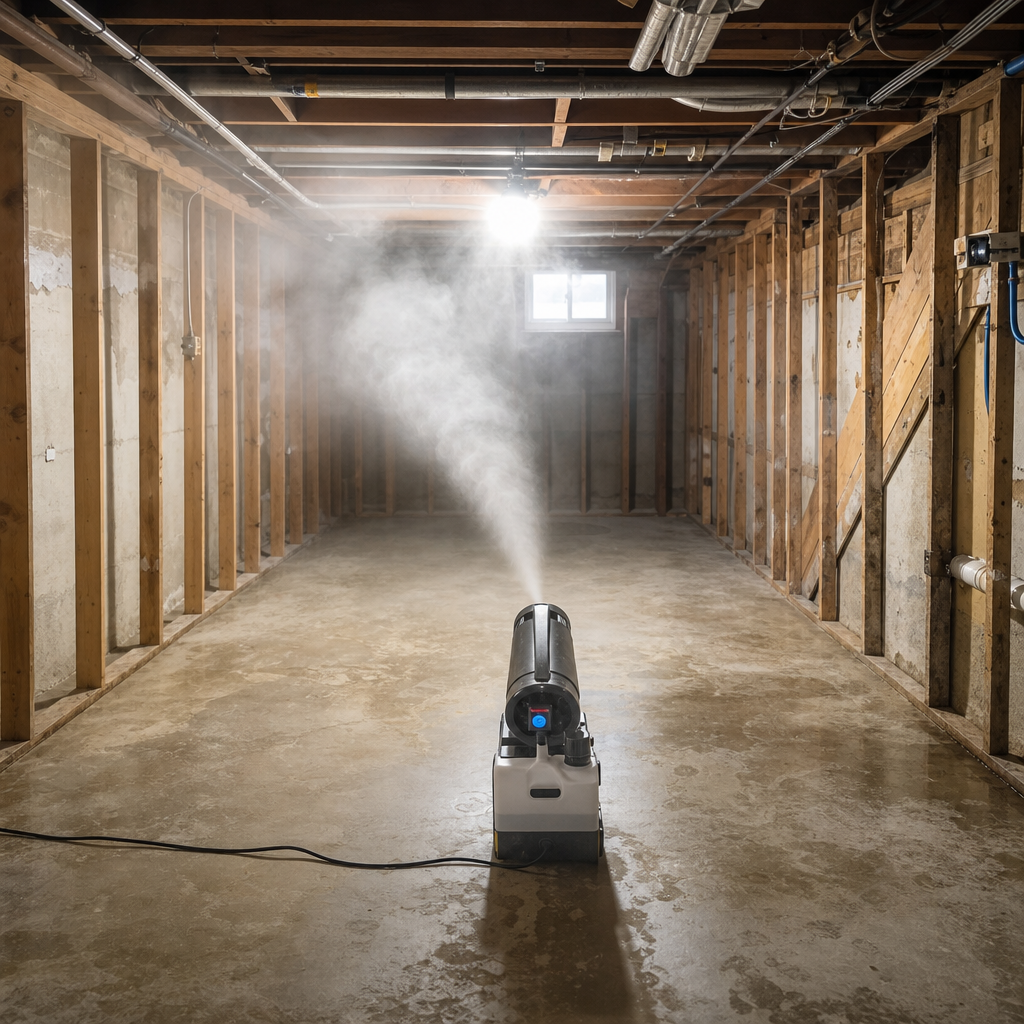
Thorough cleaning of structural surfaces must occur before drying begins to remove mud, silt, and debris.
Step 5: Structural Drying and Moisture Tracking
Pumping out standing water only solves part of the problem; moisture can remain trapped inside building materials. Structural drying, as performed by Floodline Restoration Co., requires air movement, dehumidification, and careful moisture tracking.
Drying time varies, can be longer when water penetrates walls, floors, insulation, or furnishings, and is complete only when moisture measurements confirm adequate dryness.
Step 6: Repairs and Insurance Considerations
Reconstruction should not begin until moisture measurements verify that building materials are adequately dry.
Understanding Insurance Coverage
Standard homeowners insurance generally excludes flood coverage, so separate flood insurance is typically required for flood-related losses. Coverage depends on the policy, water source, and damaged property. Standard flood insurance provides limited basement coverage and may cover certain building components and specified cleanup expenses, subject to policy terms.
Document every stage of the damage. Take clear photographs and video of all standing water, damaged personal items, and structural materials before disposal, and keep copies of all moisture records for your insurance adjuster.
What Does Flooded Basement Cleanup Cost?
Total restoration costs vary significantly from project to project. As Floodline Restoration Co. points out, because every property involves different square footage, water sources, and degrees of damage, there is no single national average cost for flooded basement cleanup.[4]
Key Factors That Influence Restoration Expenses
- Water Source and Contamination: Clean water extractions cost significantly less than sewage backups or storm floods.
- Standing Water Depth: Pumping minimal standing water takes far less labor and time than draining deep water.
- Level of Basement Finish: An unfinished basement requires minimal demolition, while a finished basement with drywall and flooring requires more extensive tear-out and reconstruction.
- Drying Duration: Dense or saturated materials take longer to dry completely, requiring more equipment run-time.
Frequently Asked Questions About Basement Flood Cleanup
How much does professional flooded basement cleanup cost?
Final costs depend on the water source, the depth of standing water, the square footage of the space, whether the basement is finished, and how much demolition is needed.
What immediate steps should I take when my basement floods?
First, protect yourself: stay out of the water until you are certain the electrical power is off. Next, locate and shut off the water source if the flood is due to a burst pipe, and contact your insurance carrier to open a claim.
Does homeowners insurance cover flooded basement water damage?
Standard homeowners insurance generally excludes flood coverage, so separate flood insurance is typically required for flood-related losses. Coverage depends on the policy, water source, and damaged property. Standard flood insurance provides limited basement coverage and may cover certain building components and specified cleanup expenses, subject to policy terms.
How long does it take to dry out a flooded basement?
Drying time varies, can be longer when water penetrates walls, floors, insulation, or furnishings, and is complete only when moisture measurements confirm adequate dryness.
How quickly does mold develop after basement flooding?
Prompt water removal and thorough drying, ideally within 24 to 48 hours when possible, help reduce mold and mildew growth and limit long-term damage.[5]
Is it safe to enter and clean a flooded basement yourself?
Entering a flooded basement carries safety risks, including electrical hazards and potential exposure to contaminants in floodwater. If the water is deep or hazards are present, stay out and consult qualified professionals such as Floodline Restoration Co.
Need flooded basement cleanup?
We’re available now - call for a fast, free estimate.
Sources
- Is New York City Ready for Rain? – comptroller.nyc.gov (2024)
- FEMA Fact Sheet Template – fema.gov (2021)
- CityofEdinaFloodResilienceFactSheets-03-24-2020.pdf – edinamn.gov (2020)
- flooded (a report by fema) – agents.floodsmart.gov
- [PDF] A Brief Guide to Mold, Moisture, and Your Home … – EPA – epa.gov
Related reading: Mold Remediation Process | 10% Off & Free Estimate | Same-Day Service
Related reading: How Long Does Mold Remediation Take | Call Now-10% Off | Same-Day Service | Free Estimate
Related reading: Sewage Backup Cleanup | 10% Off & Free Estimate | Same-Day Service
Frequently Asked Questions
How quickly can emergency crews stop damage after basement floodwater is discovered?
Floodline Restoration Co. provides 24/7 live emergency dispatch, arriving on-site within 45 minutes to perform a free visual inspection and hazard check. Immediate bulk extraction and commercial dehumidification halt structural decay and stop mold development well within the critical 24-to-48-hour window.
Why should professional contractors manage water extraction instead of pumping the basement out all at once?
Pumping out deep floodwater too quickly while the surrounding soil remains saturated can cause hydrostatic pressure to crack or collapse your foundation walls. Floodline Restoration Co. applies controlled, phased extraction and structural moisture tracking to safely protect your foundation while drying out building materials.
How does a restoration contractor assist with basement flood insurance claims?
As a single-source restoration contractor, Floodline Restoration Co. documents every stage of water loss with photographic evidence, itemized inventories, and certified moisture logs. Our team coordinates directly with your insurance adjuster to streamline claim processing from initial extraction through complete structural repair.
About the author
 |
Marcus Thorne Marcus Thorne is a certified restoration specialist with over a decade of hands-on experience in emergency water and mold mitigation. Drawing on a background in construction management from the New York Institute of Technology, he translates complex restoration procedures into actionable advice for property owners navigating unexpected damage. |
Water damage, flood, or mold emergency?
We’re available now - call for a fast, free estimate.
Call Now - Free Estimate