
Quick Summary
Understanding water damage insurance coverage is essential for homeowners because standard property policies protect against sudden, accidental plumbing breaks while excluding gradual leaks and overland flooding. Floodline Restoration Co. emphasizes that securing claim approval requires prompt mitigation and meticulous documentation to prove the timeline and exact cause of the loss. Readers will learn how to navigate policy endorsements, document damage effectively, and take the right emergency steps to ensure their insurance claims are paid quickly.
Water Damage Insurance Coverage: What May Be Covered and How to Document a Claim
When water pours through a ceiling or enters a basement, determining coverage depends on the source of the water, the circumstances of the incident, and the specific terms of your policy. Standard homeowners insurance is designed to protect against sudden and accidental interior water events, such as a burst pipe or water heater rupture. However, standard policies routinely exclude overland flooding, continuous leaks, and deferred maintenance.[5]
Less than 4% of U.S. households have an NFIP policy. Standard homeowners and renters policies generally exclude direct flood damage, while separate flood coverage may be available through the NFIP or private insurers. Understanding how policies treat different water incidents and providing prompt notice, documentation, mitigation, and compliance with policy terms can help during the claims process.[4]
What Does Standard Water Damage Insurance Coverage Include?
Quick Summary: Standard homeowners policies generally cover sudden, accidental interior plumbing failures and water damage caused by covered perils (such as a fallen tree piercing a roof during a storm). They do not cover rising surface floodwaters, storm surge, or damage from long-term, unaddressed leaks. Coverage for sewer and drain backups typically requires a specific endorsement added to your policy.
The boundary between what is covered and what is denied usually hinges on a single question: was the loss sudden and accidental, or did it develop over time?
Sudden and Accidental Discharge vs. Gradual Wear
Insurance contracts specifically distinguish between sudden events and gradual deterioration. If an interior supply line bursts unexpectedly, resulting damage is typically covered under standard property insurance. Conversely, if an investigation finds that a pipe had been slowly leaking over time – causing rot, corrosion, or long-standing mold – the insurer may deny the claim under standard maintenance exclusions.
As noted by Floodline Restoration Co., one common friction point during claim investigations involves timing. When water remains unaddressed for an extended period, secondary damage or mold may develop. Insurers may evaluate whether the loss was sudden or the result of ongoing maintenance issues. Taking prompt action can help protect your property and support your claim:
- Shut off the water: Close the main interior supply valve immediately to stop the flow at the source.
- Document the origin: Photograph the broken pipe, failed fitting, or damaged line in detail before anything is moved or discarded.
- Begin mitigation: Take prompt steps to dry affected areas and document the timeline and extent of the water loss.
Key Water Damage Scenarios
To understand where your property stands during an emergency, review how typical insurance policies treat common water intrusion events:
- Burst indoor plumbing: Covered under standard property policies as an accidental discharge.
- Appliance supply line failures: Washing machine hoses or dishwasher lines that fail suddenly are generally covered.
- Roof leaks from storm damage: If wind or falling debris punctures the roof and rain enters, the interior damage is typically covered. If the roof leaked due to age or wear, the interior claim may be disputed or denied.
- Coastal storm surge and overland flooding: Excluded under standard homeowners policies; requires a dedicated NFIP or private flood policy.
- Sewer and sump pump backups: Excluded by default on standard forms, but commonly available through an optional endorsement.
Understanding Policy Coverage and Claim Factors
Need water damage insurance coverage?
We’re available now - call for a fast, free estimate.
Every claim evaluation is shaped by your base contract, your chosen deductible, policy endorsements, and the evidence gathered at the site.
Policy Terms and Endorsements
Many homeowners assume their policy covers all indoor water incidents, only to discover during heavy storms that municipal storm drains or sewers backed up into their home. Because standard policies generally exclude water that backs up through sewers or drains, sewer or drain backup coverage may require a separate endorsement.
Deductibles and High-Risk Zones
Your out-of-pocket deductible applies before insurance funds are released for repairs. If you carry separate flood insurance through the NFIP or a private carrier, that policy operates with its own independent deductible, distinct from your regular homeowners policy.[3]
A common misconception is that property owners only need flood protection if their mortgage lender mandates it in a designated Special Flood Hazard Area (SFHA). Approximately 40% of NFIP flood insurance claims come from outside high-risk flood zones.[2]
Impact on Drywall, Subfloors, and Basements: Repair vs. Replace
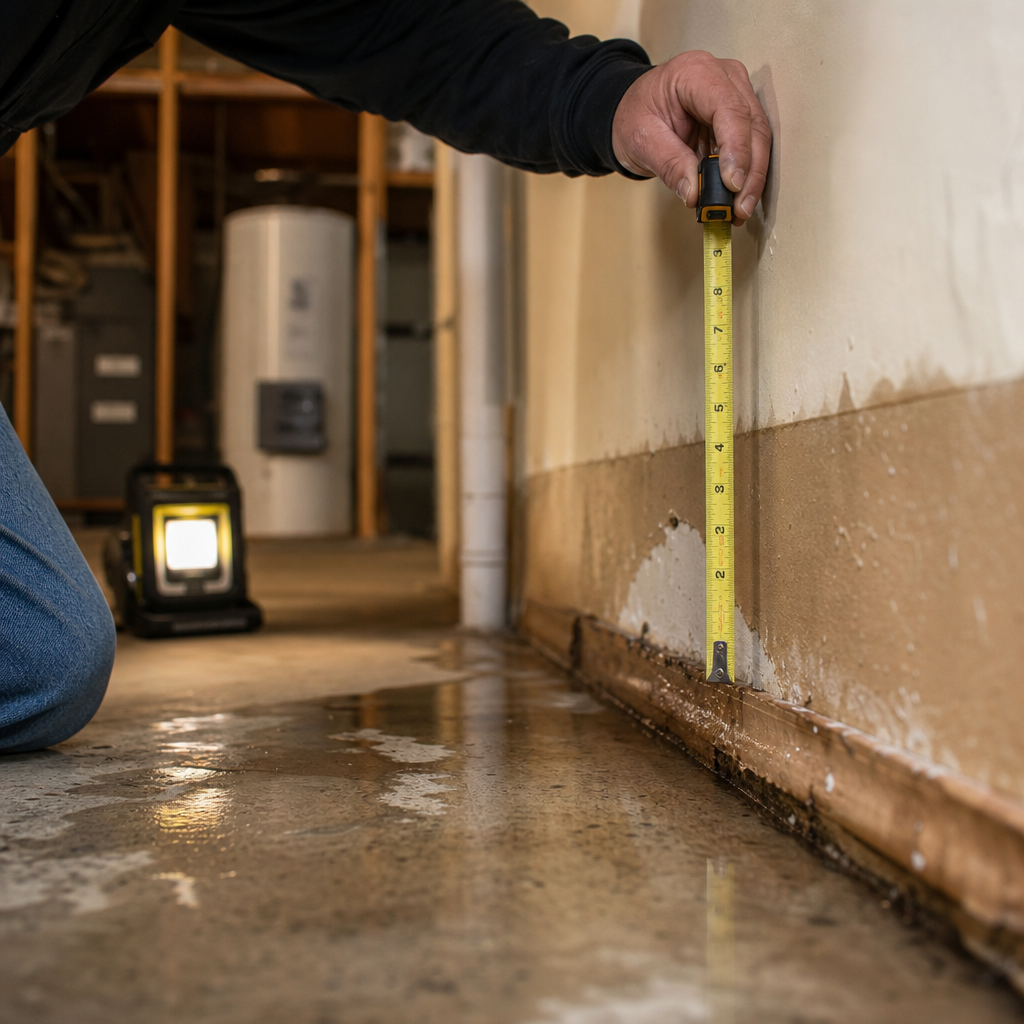
Water damage restoration often requires determining whether saturated building materials can be dried or must be removed and replaced, depending on the severity and source of the water.
Drywall and Ceilings
When clean water from a ruptured pipe affects drywall, drying may be possible if mitigation begins promptly. However, if the drywall has absorbed contaminated water, lost structural integrity, or developed mold, removal and replacement of affected materials may be necessary.
Hardwood and Subfloor Joists
Hardwood flooring and underlying subfloors can absorb water, which may cause warping or buckling. If materials cannot be dried properly or sustain structural damage, repair or replacement may be required.
Basements and Below-Grade Spaces
Basements present unique drying challenges. Water entering a basement can stem from an internal pipe break, a drain backup (which may require a separate endorsement), or groundwater seepage through foundation walls (typically excluded). As technical teams at Floodline Restoration Co. emphasize, establishing the source of the water is essential to determining coverage under your policy.
Flood Insurance vs. Water Damage Coverage
Need water damage insurance coverage?
We’re available now - call for a fast, free estimate.
Understanding the operational boundary between standard property insurance and dedicated flood policies is essential for any property owner.
| Loss Scenario | Standard Homeowners | NFIP Flood Policy | Private Flood Coverage |
|---|---|---|---|
| Sudden Internal Pipe Rupture | Generally covered (subject to deductible) | Policy-dependent | Policy-dependent |
| Overland Flooding and Storm Runoff | Generally excluded | Covered (subject to policy terms and limits) | Covered (subject to policy terms and limits) |
| Sewer / Drain Backup (No Flood) | May require separate endorsement | Policy-dependent | Policy-dependent |
| Basement Finishes (Flooding Event) | Generally excluded | Policy-dependent | Policy-dependent |
The Distinction Between Flood Damage and Water Damage
Standard homeowners and renters policies generally exclude direct flood damage, while separate flood coverage may be available through the NFIP or private insurers. In general, damage from rising surface water, storm surge, or overland flooding is classified as flood damage, whereas sudden accidental discharge from an internal plumbing system is typically treated under standard property water damage provisions.
Claim Documentation and Cause of Loss
Insurers inspect the property to determine the cause and timeline of the water loss. To support your claim, maintain documentation showing the source of the leak, photos of the damage, and records of any mitigation steps taken promptly after the incident.
NFIP Policy Considerations
As of March 31, 2025, the NFIP covered approximately $1.3 trillion in assets through nearly 4.7 million active policies. NFIP policies offer separate coverage for building property and personal contents, subject to program limits and specific coverage restrictions regarding below-grade or basement areas.[1]
How to File a Water Damage Claim Step by Step
Following a methodical process after water damage helps protect your property and ensures compliance with policy requirements.
-
Step 1: Secure the Property and Stop the Water
Shut off the main water valve and turn off electricity to affected rooms at the breaker panel if safe. Keep damaged parts or failed fittings accessible so the adjuster can examine the cause of loss.
-
Step 2: Notify Your Insurance Carrier Promptly
Contact your insurer or broker promptly to open a claim. State clearly what happened based on observable facts without speculating before an inspection takes place.
-
Step 3: Document Everything with Photos and Video
Take clear photos and video of all damaged structural elements and personal belongings before cleanup or disposal begins. Create an itemized inventory list of damaged items where appropriate.
-
Step 4: Mitigate Further Damage and Maintain Detailed Logs
Take reasonable steps to protect the property from further loss as required by policy terms. Keep copies of all emergency service receipts, contractor estimates, and written communication with your insurer.
Frequently Asked Questions About Water Damage Insurance
What factors influence water damage restoration costs?
According to Floodline Restoration Co., restoration pricing depends on the source and severity of the water, the square footage of affected space, the equipment required, and the extent of structural repairs or material replacement needed.
Does homeowners insurance cover mold resulting from water damage?
Coverage for mold remediation generally depends on policy terms and whether the mold resulted directly from a covered sudden and accidental water loss. Policies may include specific limits or exclusions for mold resulting from unaddressed leaks or long-term moisture.
What steps should be taken immediately after water damage occurs?
Shut off the water flow, ensure safety by cutting power to affected areas if necessary, document the scene with photos and video, contact your insurance company, and begin reasonable mitigation steps to prevent additional damage.
Will filing a water damage claim cause policy rates to change?
Rate impacts and policy renewals depend on individual insurance carriers, claim history, and policy terms. Inquiring directly with your insurer or agent can help clarify how a claim might affect future premiums.
How do I know if my policy includes flood insurance?
Standard homeowners and renters policies generally exclude direct flood damage, while separate flood coverage may be available through the NFIP or private insurers. A 2020 Insurance Information Institute survey found that 27% of American homeowners with homeowners insurance said they had flood insurance. Checking your policy declarations page or contacting your insurer can confirm your coverage details.
Need water damage insurance coverage?
We’re available now - call for a fast, free estimate.
Sources
- national flood insurance program – media toolkit – agents.floodsmart.gov (2025)
- Closing the Flood Insurance Gap – congress.gov (2024)
- What is My Flood Risk – floodsmart.gov (2024)
- Many homeowners have a big insurance coverage gap – cnbc.com (2025)
- What to know about flash floods and homeowners insurance – cnbc.com (2025)
Related reading: Homeowners Insurance Water Damage – Call Now-10% Off – Same-Day Service – Free Estimate
Related reading: Is Water Damage Covered By Homeowners Insurance – Call Now-10% Off – Same-Day Service – Free Estimate
Related reading: Water Mitigation Cost – Call Now-10% Off – Same-Day Service – Free Estimate
Frequently Asked Questions
How can you prove water damage was sudden rather than gradual to avoid a denied claim?
Insurers require verifiable evidence establishing that the water loss occurred abruptly rather than from unaddressed, long-term deterioration. Securing professional documentation and moisture mapping from Floodline Restoration Co., along with preserving failed plumbing fittings, provides the clear timeline adjusters need to approve coverage.
Can you begin water extraction before the insurance adjuster inspects the home?
Yes, property insurance policies legally require homeowners to mitigate secondary damage immediately to prevent mold and rot. Floodline Restoration Co. captures detailed photographic evidence, thermal imaging, and moisture logs before and during extraction to safeguard your claim while emergency drying proceeds.
Does standard water damage insurance coverage pay for repairs if a sump pump fails?
Standard homeowners policies exclude sump pump failures and drain backups unless you have purchased an optional water backup endorsement. If you lack this endorsement, emergency extraction and repairs for below-grade water intrusion must typically be covered out of pocket.
About the author
 |
Sarah Miller Sarah Miller is a certified water damage restoration specialist with over eight years of experience serving the Canarsie, NY area. Holding a degree in Environmental Science from Brooklyn College, she specializes in emergency response protocols and navigating complex insurance claims for both residential and commercial properties. Her practical expertise helps property owners understand the nuances of restoration costs and effective prevention strategies. |
Water damage, flood, or mold emergency?
We’re available now - call for a fast, free estimate.
Call Now - Free Estimate