
Quick Summary
Understanding whether water damage is covered by homeowners insurance requires distinguishing between covered sudden, accidental plumbing failures and excluded gradual leaks or maintenance neglect. Because adjusters quickly deny claims showing secondary rot or mold, prompt professional extraction and date-stamped moisture documentation from Floodline Restoration Co. are vital to proving loss timelines. Readers will learn how to identify covered perils, avoid common DIY cleanup traps, and properly coordinate with insurers to ensure full restoration coverage.
Is Water Damage Covered by Homeowners Insurance? Claim Guide
If you are trying to find out whether is water damage covered by homeowners insurance, the short answer is usually yes, but only if the damage is sudden and accidental. Events like a frozen pipe splitting overnight, an ice dam pushing meltwater into an attic, or a washing machine supply line snapping are standard covered losses. However, getting your carrier to pay for cleanup and structural repairs requires immediate proof. About 1 in 67 insured homes files a water damage or freezing claim each year, but adjusters routinely deny claims if they believe the root cause was ongoing neglect or deferred maintenance.[1]
When clean water or sewage enters your home, speed determines whether your claim gets approved or denied. Certified mitigation technicians at Floodline Restoration Co. immediately extract standing water, log moisture readings, and preserve photographic evidence to document the loss timeline. Taking quick action stops damage from spreading and helps fulfill policy expectations regarding damage mitigation.
Is Water Damage Covered by Homeowners Insurance? Quick Answer
Quick Answer: Yes. Standard home insurance covers sudden, accidental discharge of water from internal systems. This includes split supply lines, ruptured water heaters, and sudden appliance overflows. Standard policies typically do not cover slow, hidden leaks, general wear and tear, municipal sewer backups (which generally require an endorsement), or floodwaters, which typically require separate flood coverage.[4]
When insurance covers a loss, the policy pays for emergency water extraction, structural dehumidification, sanitization, and the physical repairs required to rebuild floors, drywall, and framing back to their pre-loss condition.
The 3-Point Coverage Summary
- Covered Events: Sudden indoor plumbing failures, burst water lines, failed water heater tanks, and accidental appliance overflows.
- Excluded Incidents: Slow leaks inside walls, long-term seepage, unaddressed roof leaks, sewer line backups (which typically require specialized endorsements), and overland flooding.
- Mitigation Requirements: Policies generally require property owners to take reasonable steps to stop water spread and minimize secondary damage.
Key Criteria Adjusters Use to Determine Claim Eligibility
According to the Insurance Information Institute, water damage and freezing account for nearly a quarter of all residential property claims. When an adjuster reviews a claim, they inspect two main elements: the point of origin and the timeline of the water release. They look specifically for evidence that shows whether a pipe failed all at once or deteriorated over months.[2]
Using digital psychrometric logs, thermal imaging, and daily moisture maps provides the data adjusters need to verify that an incident was sudden.
Covered Sudden Losses vs. Excluded Gradual Leaks: What Adjusters Check
Need is water damage covered by homeowners insurance?
We’re available now - call for a fast, free estimate.
Water claims generally fall into two categories: acute sudden events and long-term gradual seepage. Sudden failures get paid, while slow leaks, rust, and hidden drips are classified as maintenance neglect and denied.
Sudden and Accidental Failures vs. Long-Term Seepage
Standard policies cover sudden incidents like frozen pipes, blown toilet supply lines, and sudden second-floor tub overflows. Verisk and ISO property data shows water damage and freezing represented 27.6% of all homeowners insurance losses in 2022. The line between an approval and a denial comes down to physical evidence of timing.
| Evidence Factor | Covered Loss (Sudden) | Excluded Loss (Gradual) | Standard Documentation |
|---|---|---|---|
| Origin Timeline | Recent, sudden occurrence | Ongoing or long-term moisture | Date-stamped infrared thermal imaging |
| Structural State | Wet, structurally solid framing | Soft wood rot, rusted fasteners, structural decay | Digital moisture meter logs |
| Biological Growth | No visible fungal colonies | Established mold colonies and heavy spore buildup | IICRC water category classification report |
The DIY Delay Trap: How Adjusters Reclassify Claims
When property owners face water in a finished basement or living area, many attempt DIY cleanup using household shop vacuums and box fans. This often creates an expensive trap.
Box fans only dry surface materials. Water quickly travels into baseboards, sill plates, underlayment, and shared wall cavities. Over time, trapped moisture softens wood and allows mold to form inside the walls. When a field adjuster inspects the property days later and spots mold or wood rot, they frequently claim the damage was an ongoing, neglected leak rather than an acute pipe failure. That reclassification can give the insurer grounds to deny the claim. Immediate professional extraction and commercial drying help prevent this by stabilizing the structure before secondary damage develops.
Structural Vulnerabilities in Older and Attached Buildings
In attached brick and wood-frame structures, shared party walls act like sponges. Water from a split pipe on an upper floor travels horizontally along floor joists and into adjoining wall cavities. In coastal or low-lying neighborhoods, freezing winter temperatures combined with ground shifts put high stress on aging plumbing. Documenting the precise source immediately protects property owners from disputes with neighbors and insurers alike.
Structural Impact: Drywall, Basements, and Hardwood Subfloors
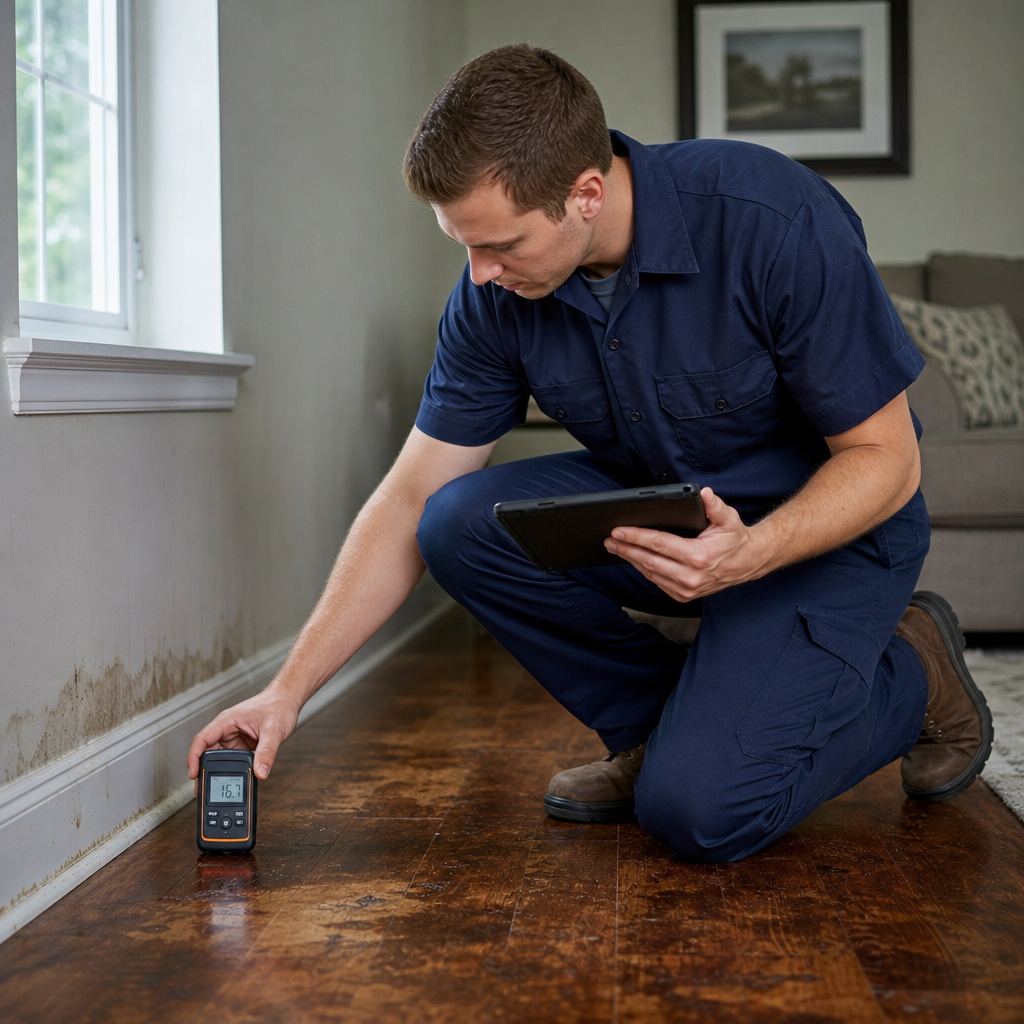
Standing water degrades building materials rapidly. Sheetrock loses its load capacity quickly, baseboards swell, and subfloors begin to separate. Because mold and deterioration can develop rapidly on damp organic surfaces, insurance carriers look closely at whether drying began promptly.
Drywall and Ceilings: Moisture Saturation and Microbial Growth
Soaked drywall sags under its own weight, turning into an overhead safety hazard when water pools above a ceiling. When property owners ask, does insurance cover mold from water damage, the answer depends on the policy and the source of the water. Mold remediation coverage varies widely by policy terms and endorsements, though it may be covered if it directly stems from a sudden covered water disaster that was handled promptly. If mold stems from ongoing humidity, unresolved leaks, or neglected repairs, carriers generally exclude coverage.
Basement and Crawl Space Flooding: Clean Water vs. Black Water Backups
Water damage falls into three primary categories under IICRC S500 standards:
- Category 1 (Clean Water): Originates from broken supply lines, sink overflows, or failed water heaters. Drywall and framing can often be saved if commercial dehumidification starts right away.
- Category 2 (Gray Water): Carries chemical or biological contaminants, such as dishwasher discharge or washing machine overflows. Carpet padding and affected porous materials usually require removal.
- Category 3 (Black Water): Highly contaminated water from sewer line backups, toilet traps, or storm-driven street runoff. Porous materials must be removed and discarded, and all hard surfaces require antimicrobial treatment. Coverage for sewer backups and black water events typically requires specific endorsements, as standard policies generally exclude them.
Hardwood Floors and Subfloors: Cupping and Delamination
Hardwood floorboards cup when the underside absorbs moisture from the subfloor faster than the top can evaporate it. Plywood and oriented strand board (OSB) subfloors swell and delaminate if moisture sits beneath finished flooring. ISO data indicates that the average water damage claim exceeded $13,900 in recent years. Using injectidry floor mats and commercial LGR dehumidifiers can pull moisture directly out of subfloors, saving expensive hardwoods and avoiding full floor replacements.[3]
What Does Water Damage Restoration Cost Under Insurance?
Need is water damage covered by homeowners insurance?
We’re available now - call for a fast, free estimate.
When an insurance carrier approves a water claim, the homeowner pays only their agreed policy deductible. The carrier pays the remaining balance directly to the restoration contractor or issues a joint check to cover approved dwelling repairs under Coverage A.
Coverage by Restoration Category
| Restoration Service | Insurance Policy Application |
|---|---|
| Clean Water Extraction and Structural Drying | Covered under Dwelling Coverage (Coverage A) for sudden events |
| Mold Remediation and Antimicrobial Treatment | Coverage varies by policy and may be subject to specific endorsements or sub-limits |
| Category 3 Sewage Extraction and Sanitization | Generally requires a Water Backup endorsement depending on policy terms |
| Personal Property Cleaning and Pack-Out | Covered under Personal Property (Coverage C) for covered losses |
Deductibles and Direct Insurance Billing
Water claims carry a standard property deductible, commonly $1,000 or $2,500. Professional restoration companies like Floodline Restoration Co. use Xactimate, the same pricing software used by major insurance carriers. This alignment ensures line items for extraction, air movers, dehumidifiers, and selective demolition match carrier guidelines, preventing unexpected out-of-pocket balance billing.
How to File a Water Damage Claim
Filing a successful water damage claim requires swift mitigation, clean documentation, and direct coordination with your adjuster.
-
Step 1: Shut Off the Water and Call a Certified Restoration Crew
Locate your main shut-off valve immediately to stop the flow. Contact a certified restoration company like Floodline Restoration Co. promptly. Taking reasonable steps to prevent further damage helps satisfy standard policy conditions and establishes early documentation.
-
Step 2: Collect Moisture Data and Detailed Photographic Proof
Photograph everything: the failed pipe or supply line, standing water levels, ruined baseboards, damaged furniture, and personal belongings. Restoration technicians will record relative humidity, ambient temperature, and moisture content across all affected materials to build a clear record of sudden loss.
-
Step 3: Submit the Claim with Itemized Scope Sheets
Notify your insurance carrier to open the claim. Provide the adjuster with the itemized scope of work, moisture readings, and equipment logs prepared by your restoration team. This direct documentation eliminates disputes over whether the damage was fresh or ongoing.
Frequently Asked Questions About Water Damage Insurance Coverage
What determines if water damage restoration is covered?
Coverage depends primarily on whether the water intrusion was sudden and accidental. Ruptured pipes, broken appliance lines, and sudden water heater splits are standard covered events. Gradual leaks, ground seepage, unaddressed roof drips, and normal wear and tear are excluded.
Does homeowners insurance cover mold caused by a water leak?
Home insurance coverage for mold varies by policy and endorsement. It is typically covered only if the mold grew directly as a result of a covered, sudden water loss and steps were taken promptly to address it. If mold developed because of an ongoing leak or deferred repairs, insurers generally deny coverage.
What is the difference between flood insurance and water damage coverage?
Standard home insurance covers water that originates inside your home, such as a burst pipe or overflowing appliance. It excludes floodwater that originates outside and moves across the ground into your home. Outdoor surface flooding typically requires a separate policy through the NFIP or a private flood insurer.
Does home insurance cover leaking roof water damage?
If wind, hail, or a fallen tree creates a sudden opening in your roof during a storm, the resulting interior water damage is covered. If water enters through aged, deteriorating shingles that have not been maintained, the claim will likely be denied.
Why is rapid response important for water damage claims?
Property policies generally require homeowners to take reasonable steps to prevent further damage after a loss. If standing water is left unaddressed, adjusters may classify subsequent deterioration and mold as preventable secondary damage, which can lead to reduced payouts or claim denials.
Need is water damage covered by homeowners insurance?
We’re available now - call for a fast, free estimate.
Sources
- Water Damage Insurance Claims Statistics (2026) – consumeraffairs.com (2026)
- Home Water Damage Statistics 2026 – housecashin.com (2026)
- Average Insurance Payout For Water Damage (June 2026) – consumershield.com (2026)
- Does Homeowners Insurance Cover Water Damage? – allstate.com
Related reading: Homeowners Insurance Water Damage – Call Now-10% Off – Same-Day Service – Free Estimate
Related reading: Water Mitigation Cost – Call Now-10% Off – Same-Day Service – Free Estimate
Related reading: Sewage Cleanup Cost | 10% Off & Free Estimate | Same-Day Service
Frequently Asked Questions
How do I prove water damage was sudden if my insurance adjuster suspects an ongoing leak?
Adjusters look for soft wood rot, rusted fasteners, and established mold colonies to claim pre-existing neglect. Having Floodline Restoration Co. capture date-stamped thermal imaging, psychrometric logs, and digital moisture maps immediately after an incident provides the objective baseline needed to verify an acute, covered failure.
Will I have to pay water restoration costs out of pocket before my insurance claim is settled?
Most homeowners are only responsible for paying their agreed policy deductible directly to the mitigation team. Floodline Restoration Co. bills insurance carriers directly using Xactimate pricing software, matching insurer-approved line items to prevent unexpected out-of-pocket balance billing.
Does standard homeowners insurance cover sewage backups in a basement?
Standard policies exclude municipal sewer line backups and drain overflows unless you have added an optional Water Backup and Sump Discharge endorsement. When this endorsement is present, your policy covers professional Category 3 black water extraction, decontamination, and structural drying up to your specific endorsement limit.
About the author
 |
Sarah Miller Sarah Miller is a certified water damage restoration specialist with over eight years of experience serving the Canarsie, NY area. Holding a degree in Environmental Science from Brooklyn College, she specializes in emergency response protocols and navigating complex insurance claims for both residential and commercial properties. Her practical expertise helps property owners understand the nuances of restoration costs and effective prevention strategies. |
Water damage, flood, or mold emergency?
We’re available now - call for a fast, free estimate.
Call Now - Free Estimate