
Quick Summary
Category 3 blackwater backups present immediate biohazards that quickly saturate porous materials, making certified sewage cleanup services essential to stop pathogen spread and structural decay. Floodline Restoration Co. provides complete end-to-end remediation through rapid emergency extraction, sub-surface moisture mapping, hospital-grade sanitization, structural rebuilds, and direct insurance claim coordination. Readers will understand critical biohazard containment standards and how to access Floodline Restoration Co.'s 24/7 emergency dispatch line for immediate extraction or a free visual inspection.
Sewage Cleanup Services – Fast Safe Blackwater Removal
When a sewer line backs up or a basement drain overflows, you are dealing with Category 3 blackwater. This is an immediate biohazard. Professional sewage cleanup services stop contaminated water from destroying your building materials, neutralizing dangerous pathogens before they spread throughout the property. Raw sewage carries parasites, bacteria, and viruses that soak into concrete sub-floors, wooden framing, and shared party walls within hours of exposure.
Floodline Restoration Co. provides 24/7 emergency sewage extraction across Canarsie and surrounding Brooklyn neighborhoods. We do not route your emergency through third-party call centers or subcontract the work to untrained laborers. Our own IICRC-certified crews arrive in fully equipped emergency vehicles within 45 minutes of your call. We handle containment, biohazard extraction, hospital-grade sanitization, structural drying, and full repairs, coordinating directly with your insurance adjuster from day one.
Emergency Sewage Cleanup Services: 45-Minute Response and What to Expect
Category 3 wastewater spreads quickly across lower levels, finding pathways under concrete slabs and traveling up porous brickwork. Our emergency response team focuses on immediate containment and extraction to keep biohazards from migrating into occupied living areas or neighboring units.
Key Priorities During a Biohazard Crisis
- Fast Site Containment: Stopping wastewater flow and isolating the contaminated zone with plastic sheeting and negative air pressure.
- Sub-Surface Moisture Mapping: Using thermal imaging and moisture meters to find wastewater hidden behind baseboards, beneath tiles, and inside wall cavities.
- Direct Insurance Documentation: Recording detailed moisture logs, itemized damage inventories, and date-stamped photos so your claim moves forward without paperwork delays.
Immediate Action Checklist for Property Owners
- Keep Everyone Away: Evacuate children, pets, and tenants from the lower levels. Never wade through blackwater without personal protective equipment.
- Turn Off the HVAC System: Shut down forced-air heating and air conditioning to avoid pulling airborne bacteria and odors into the upper floors.
- Do Not Use Household Fans: Standard box fans or shop vacuums blow dangerous bio-aerosols into the air and spread contamination to clean rooms.
- Call for Certified Dispatch: Contact our live emergency line so an IICRC-certified crew can begin extraction before structural framing absorbs wastewater.
What Does Sewage Cleanup Services Cost?
Need sewage cleanup services?
We’re available now - call for a fast, free estimate.
The cost of sewage remediation depends on the volume of standing wastewater, how long it sat on the property, and how deep it traveled into structural materials. In most cases, standard homeowners and commercial property policies cover professional cleanup when you have a sewer backup rider attached to your plan.
Typical Breakdown for Emergency Restoration
Remediation scopes vary based on the extent of structural saturation:
| Damage Scope | Key Restoration Procedures |
|---|---|
| Minor / Contained | Standing water extraction, surface wash with EPA-registered antimicrobials, structural dehumidification |
| Moderate / Multi-Room | Porous flooring removal, baseboard and drywall flood cuts, subfloor sanitization, HEPA air scrubbing |
| Severe / Structural Wicking | Sub-slab gravel flushing, party-wall cavity drying, framing antimicrobial seals, full structural rebuild |
Factors Influencing Your Final Quote
Urban homes with shared party walls present specific cleanup challenges. If wastewater enters the space between adjoining brick or wood-frame properties, cleanup requires targeted cavity drying to prevent hidden mold growth and structural decay. We provide written, itemized scopes on-site so you know the exact steps required before work begins.
Professional Sewage Removal vs. Risky DIY: Evaluating Your Cleanup Options
Cleaning raw sewage with household bleach and a shop vacuum leaves deep contamination untouched. Porous concrete, subflooring, and wall studs absorb blackwater beneath the surface, creating hidden bacterial reservoirs and persistent odors. Professional remediation isolates the biohazard, removes non-salvageable materials, and treats structural framing with commercial antimicrobials.
Biohazard Safety and Equipment Comparison
Raw wastewater contains pathogens such as E. coli, Salmonella, and hepatitis A. Handling it requires commercial-grade extraction systems, HEPA filtration, and strict disposal protocols.
| Feature | DIY Cleanup | Subcontracted Labor | Floodline Restoration Co. |
|---|---|---|---|
| Bio-Aerosol Containment | No containment | Variable | HEPA negative air containment |
| Sub-Slab & Cavity Moisture Tracking | Visual inspection only | Basic surface meters | Infrared cameras and deep probe meters |
| Certified In-House Technicians | None | Third-party workers | 100% IICRC-certified staff |
| Insurance Claim Coordination | None | Rarely provided | Full documentation and direct adjuster billing |
Subcontracted Labor Risks vs. Dedicated Certified Teams
Hiring unvetted general contractors or gig workers for sewage extraction creates real risks for property owners. Without biohazard training, workers often miss contamination trapped in sill plates and wall cavities, exposing residents to airborne bacteria and future mold problems. Floodline Restoration Co. handles every phase with our own background-checked technicians, maintaining strict quality control from initial extraction to final sign-off.
Basement Sewage Cleanup: Protecting Sub-Slab Foundations and Joists
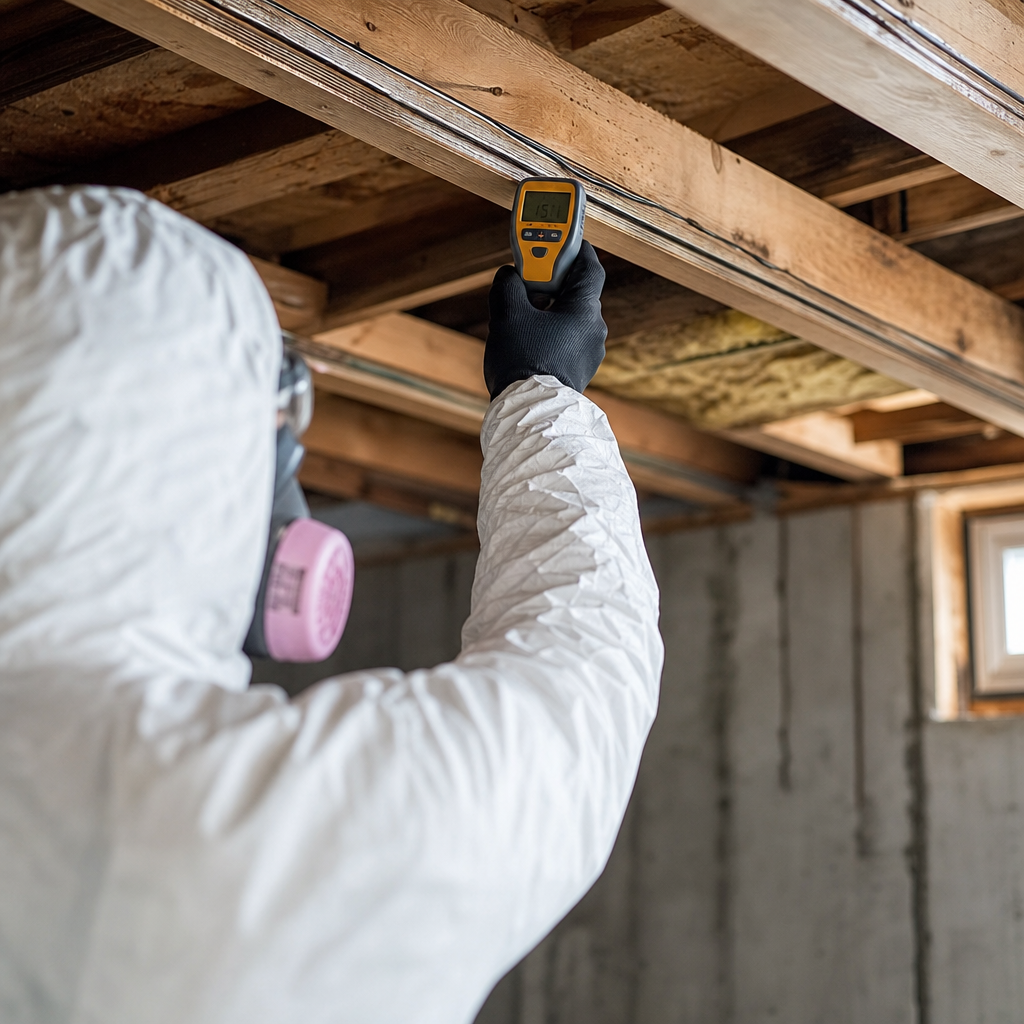
In low-lying Brooklyn areas near Jamaica Bay and Paerdegat Basin, basement backups frequently push blackwater through floor drains and foundation joints. Effective basement sewage cleanup requires looking beyond standing floor water to inspect the sub-slab foundation and structural floor joists above.
Hidden Migration Through Porous Urban Party Walls
In attached brick townhouses and row homes, wastewater rarely stays contained to a single floor surface. Blackwater wicks upward through porous mortar joints, sill plates, and shared stud bays. If these spaces are not opened, sanitized, and dried with industrial desiccant equipment, trapped moisture will rot the framing and travel into neighboring living areas.
Sub-Slab Cavity Extraction and Moisture Tracking
When water backs up under pressure, it forces its way beneath concrete slab expansion joints and pools in the crushed stone aggregate underneath. Left untreated, this trapped blackwater releases persistent sewer gas and foul odors. Our technicians use thermal imaging cameras and penetrating moisture probes to locate sub-slab saturation, using negative pressure systems to pull moisture out of the foundation assembly.
Restoring Drywall, Framing, and Flooring After Raw Sewage Contamination
Need sewage cleanup services?
We’re available now - call for a fast, free estimate.
Under industry restoration standards (IICRC S500), porous materials saturated by Category 3 blackwater cannot be adequately sanitized and must be removed. Solid structural elements, such as framing studs and concrete foundations, can often be decontaminated, dried, and preserved.
Repair vs. Replace Guidelines for Category 3 Blackwater
Because blackwater carries dangerous pathogens, our crews follow strict material management protocols:
- Drywall and Insulation: Technicians make precision flood cuts 12 to 24 inches above the highest water mark. All contaminated sheetrock, baseboards, and insulation are bagged and safely discarded.
- Carpeting and Padding: Soft flooring absorbs bacteria instantly and must be removed and disposed of according to local biohazard regulations.
- Structural Framing: Solid wood studs, plates, and masonry are power-washed with EPA-registered antimicrobials, hand-scrubbed, and dried using high-velocity air movers and commercial dehumidifiers.
Hardwood, Laminate, and Subfloor Decontamination
Laminate and engineered wood floors trap contaminated moisture in their backing and must be removed. Plywood or OSB subfloors can often be saved if extraction starts before the wood begins to delaminate. Once drying is complete, the Floodline Restoration Co. rebuild team steps in to replace sheetrock, trim, and flooring, returning your space to its pre-loss state.
How Certified Technicians Sanitize and Deodorize Biohazard Backups
Complete biohazard removal requires a multi-stage decontamination process that cleans structural surfaces and purifies indoor air throughout the building.
Hospital-Grade Antimicrobial Application
Our sanitization process eliminates bacteria on direct surfaces and deep inside semi-porous framing:
- Initial Pathogen Knockdown: Crews apply an initial broad-spectrum antimicrobial wash across the entire affected area to reduce airborne risks during demo and extraction.
- Deep Mechanical Cleaning: Framing, concrete surfaces, and subfloors are thoroughly scrubbed to remove biological residue.
- Secondary Sanitization Wash: A second EPA-registered disinfectant is applied to all exposed framing to prevent microbial growth during the drying process.
HEPA Air Scrubbing and Odor Neutralization
Sewer backups leave behind foul odors caused by volatile organic compounds (VOCs) and bio-aerosols. We run industrial HEPA air filtration units continuously to capture 99.97% of airborne particles down to 0.3 microns. For stubborn smells, we deploy hydroxyl generators that break down odor molecules at a molecular level without damaging sensitive electronics or finishes.
Frequently Asked Questions About Sewage Cleanup Services
How much does sewage cleanup cost in Canarsie and Brooklyn?
Pricing depends on water volume, the square footage contaminated, and how deeply moisture entered subfloors and party walls. Most property owners use insurance coverage to manage these costs. We provide free on-site visual inspections and detailed itemized scopes before any work begins.
How quickly should sewage damage be remediated?
Extraction should begin immediately. Category 3 wastewater can cause secondary damage, wood rot, and airborne mold within 24 to 48 hours. Fast response keeps repair costs lower and protects structural framing from permanent decay.
Is sewage cleanup covered by standard homeowners insurance?
Most standard homeowners policies require an optional Sewer and Drain Backup endorsement to cover blackwater cleanup. When you have this coverage, Floodline Restoration Co. works directly with your insurance adjuster, providing daily moisture logs, drying records, and photos to support your claim.
Can carpets or drywall be saved after a raw sewage backup?
No. Porous materials like drywall, carpet, and carpet padding trap bacteria within their fibers and core material. These items cannot be safely disinfected and must be cut out, discarded, and replaced to ensure the building is safe to occupy.
Need sewage cleanup services?
We’re available now - call for a fast, free estimate.
Frequently Asked Questions
How long does it take to safely reoccupy a home after professional sewage cleanup?
Most residential sewage remediation projects take three to five days to complete full extraction, antimicrobial decontamination, and structural drying. Floodline Restoration Co. performs thorough moisture mapping and clearance testing to verify all biohazards and airborne pathogens are completely eliminated before re-entry.
How do professionals clean up sewage trapped beneath concrete basement slabs?
Technicians use infrared thermal imaging and deep penetrating probes to detect wastewater pooled in the crushed aggregate below foundation slabs. Floodline Restoration Co. utilizes specialized negative pressure systems and targeted cavity drying to extract contaminated moisture and neutralize dangerous sewer gases without requiring complete slab demolition.
What happens if sewage backup wicks into shared party walls in attached townhomes?
Blackwater travels quickly through porous mortar and shared wood stud bays, creating hidden biohazards for adjacent units. Floodline Restoration Co. isolates the structural cavities, applies hospital-grade antimicrobials, and deploys commercial desiccant dehumidifiers to halt structural decay and pathogen spread across property lines.
About the author
 |
Marcus Thorne Marcus Thorne is a certified restoration specialist with over a decade of hands-on experience in emergency water and mold mitigation. Drawing on a background in construction management from the New York Institute of Technology, he translates complex restoration procedures into actionable advice for property owners navigating unexpected damage. |
Water damage, flood, or mold emergency?
We’re available now - call for a fast, free estimate.
Call Now - Free Estimate