
Injectidry Water Damage Restoration in Canarsie: A Homeowner’s Guide
Injectidry systems dry wall cavities from the inside out using negative air pressure, pulling moisture through small holes instead of cutting out the drywall. In Canarsie, where so many homes are wood-framed rowhouses built decades ago, this one technique can save thousands in unnecessary demolition. It isn’t a brand name most people recognize, but when a contractor skips cavity drying and jumps straight to tearing out walls, that’s where the bill climbs fast. If you’d rather skip the technical detail and just get someone to look at your walls, call (716) 412-2972 and we’ll send a certified technician to Canarsie today.
Here’s the number that matters: a contractor who skips Injectidry-style cavity drying and goes straight to demolition can add $3,000 to $6,000 to a job that didn’t need it. The homeowner never knows the difference because the work order just says “drywall removal and replacement.” This guide explains what Injectidry actually does, when it’s the right call, and when walls genuinely do need to come down, so you can ask the right questions before a single panel gets cut.
What Injectidry Actually Does (And Why a Fan in the Room Isn’t Enough)
When water gets into a wall cavity in a Canarsie home, it soaks into the back side of the drywall, the studs, and the insulation. Air movers placed in the room blow across the surface. That dries the exposed face, but it can’t reach the hidden moisture sitting inside the cavity. The drywall itself acts as a vapor barrier of sorts, trapping what’s behind it.
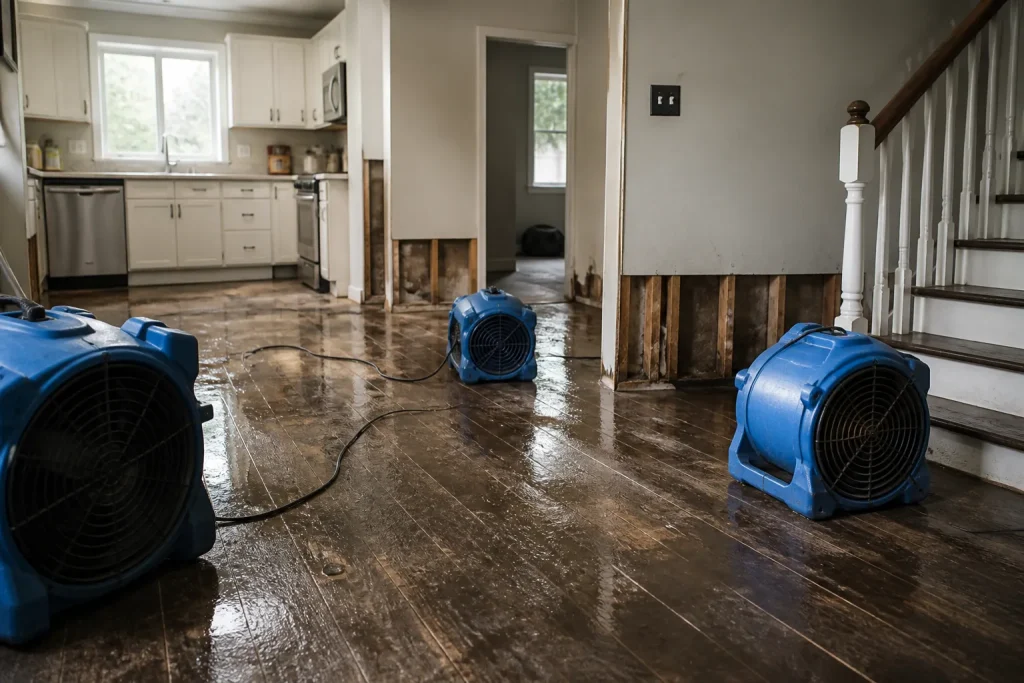
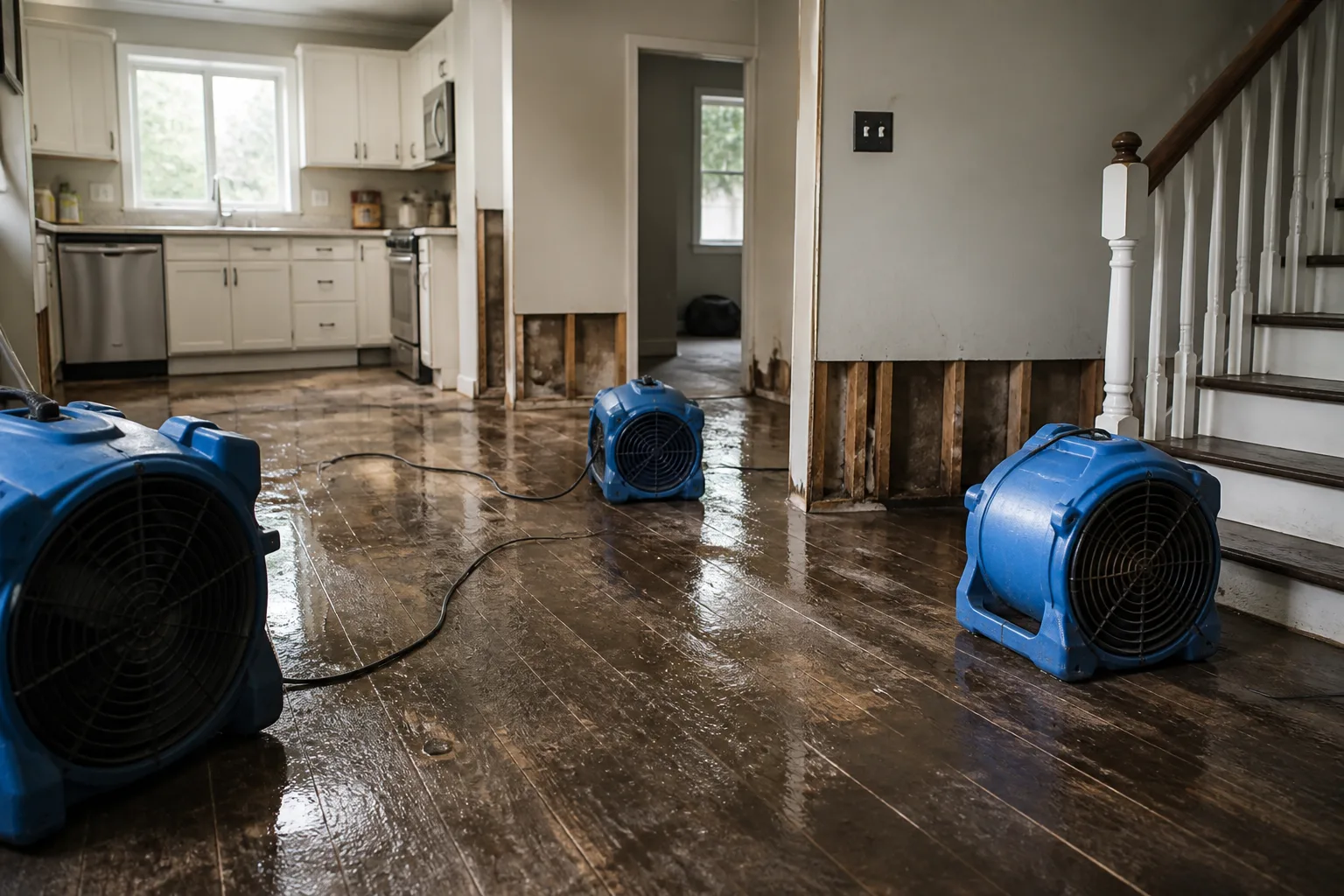
Injectidry changes the physics. A technician drills small holes, typically about the size of a dime, behind the baseboard line or in an inconspicuous area. Panels attach over those holes and connect to hoses. The system pulls air through the cavity under negative pressure, forcing the trapped moisture to evaporate and exit through the hose. It’s targeted extraction without cutting the wall open.
This is the specific reason a flooded wall cavity gets dry without demolition. Standard equipment can’t create that directional airflow inside an enclosed space. In our experience in Canarsie, especially on streets like Flatlands Avenue where the rowhouses share walls, the cavity space is small and the framing is old-growth lumber that’s denser than what you find in new construction. That lumber holds water stubbornly. Surface drying alone won’t pull it out.
We run this equipment alongside Dri-Eaz and Phoenix dehumidifiers because drying is a system, not a single tool. The Injectidry handles what’s hidden. The dehumidifiers handle what’s in the air. The moisture meter tells us when both have done their job.
How Much Does Injectidry Drying Cost in Canarsie?
Injectidry equipment usage typically runs between $300 and $700 per affected room, depending on how long the system needs to run and how many panels are required. That’s a fraction of what full drywall removal and replacement costs. Here’s how the numbers compare in the Canarsie market:
- Cavity drying with Injectidry: $300 to $700 per room, includes equipment, daily readings, and the moisture log.
- Partial drywall removal (below the water line): $800 to $1,800 per room, plus repainting.
- Full wall removal and rebuild: $2,500 to $4,500 per room, depending on insulation type, trim work, and finish level.
- Full room gut including flooring: $5,000 and up.
The key point is that Injectidry pays for itself when the framing is still sound. If the drywall is swollen, crumbling, or has been wet for more than 72 hours with visible mold growth, that’s a different story. But if the water came from a clean source, like a supply line or a radiator overflow, and you catch it within a day or two, cavity drying is very often the right answer.
Our pricing at Floodline Restoration Co. home follows the same rule we’ve used since Curt Bowman founded the company in 2010: a written scope before work starts, no surprises on the bill, and direct insurance billing so you never have to play messenger with the carrier.
When Injectidry Works, and When Walls Really Do Need to Come Down
A certified technician uses two numbers to make this call. The first is wood moisture content, measured as a percentage. The second is relative humidity inside the cavity, read with a probe. Here’s what those readings tell us in most Canarsie homes:
- Wood moisture content between 16% and 25%: Injectidry is the correct approach. The framing is wet but not saturated, and the drywall can typically be saved.
- Wood moisture content above 25% for an extended period: The framing has reached fiber saturation. It will likely dry, but the drywall may have wicked too far up to salvage.
- Relative humidity in the cavity above 70% with visible staining or wicking on the drywall face: This is the borderline case. If the staining is wicking upward and the drywall is soft when pressed, demolition is usually the honest answer.
- Water from a contaminated source, like sewage: No amount of drying makes that drywall safe. It comes out, period. We handle that under our Water Damage Restoration in Canarsie service, and the process is entirely different.
Canarsie’s older wood-framed rowhouses trap water differently than newer builds. The lumber in homes built before the 1960s is denser, often true 2x4s instead of the nominal 1.5×3.5 you get now. That extra half inch of actual wood holds more moisture and releases it slower. It also means the cavity space is often shallower, which actually makes negative-pressure drying more effective. Less air volume to move means the Injectidry system reaches the dry standard faster.
One job we ran on East 92nd Street last spring involved a supply line that let go inside a finished basement wall. The homeowner caught it within hours because they were home. The drywall was still firm. We set up three Injectidry panels, ran them for four days, and hit the dry standard without cutting a single panel. The total bill was under $800 for the drying portion. The alternative was a full wall rebuild that would have run past $3,000 with paint and trim.
That’s the difference knowing the system makes. When to call a pro: if you see water staining climbing up a wall, if the wall feels soft, or if you smell something damp and can’t find the source, call us. These situations get worse when they’re left alone, and the dry standard gets harder to hit the longer moisture sits.
The Moisture Log: What It Looks Like and Why It Matters
A complete drying job is documented daily. Here’s what a proper moisture log from an Injectidry job in Canarsie includes:
- The date and time of each reading.
- The wood moisture content percentage at each monitored point, marked on a floor plan sketch.
- The relative humidity reading from inside each affected cavity.
- The ambient temperature and relative humidity in the room.
- The equipment status, including how many Injectidry panels are running and any changes made that day.
- The target dry standard, which for most Canarsie homes is wood moisture content at or below 15% with cavity relative humidity below 50%.
We hand that log to the homeowner and to the insurance carrier when the job closes. It’s part of the Mold Remediation in Canarsie prevention file, too, because drying a wall to the dry standard is the single best way to avoid mold problems six months later.
If a contractor can’t produce daily readings, that’s a red flag. It means the drying was done by guesswork. It also means the insurance carrier has no documentation to confirm the method was appropriate, which can lead to a denied supplement or a disputed claim. Injectidry logs serve as line-item proof that the drying method matched the moisture conditions. That’s something carriers recognize, and it’s one reason we hold technicians to IICRC training standards on every job.
Related services in Canarsie: if the water came from a roof leak or a storm backup, our Fire & Smoke Damage Restoration in Canarsie crews handle those differently, but the drying principles are the same. The moisture log is the backbone of any restoration file, regardless of the source of the water.
Why Canarsie Homeowners Should Ask About Cavity Drying Specifically
A contractor’s quote tells you what they plan to do. The question of whether they considered Injectidry-style drying tells you how they think. If the water is clean, the drywall is firm, and the moisture readings haven’t hit fiber saturation, an honest contractor tries drying first. It’s cheaper for you, it’s less disruptive, and it preserves the original construction instead of replacing it with new material that may not match.
In Canarsie, preserving original construction matters more than in a new development. The homes on streets from Flatlands Avenue down to the Belt Parkway were built well. The plaster is thick. The framing is old-growth. Replacing it with modern drywall and dimensional lumber changes the feel of the house. It’s not wrong if it’s necessary. But throwing away sound material because a crew didn’t have the right drying equipment, that’s a waste of your money and your house’s history.
Floodline Restoration Co. has been drying buildings this way since 2010, using professional-grade Injectidry, Dri-Eaz, Phoenix, XPOWER, and B-Air equipment. Our technicians are background-checked, uniformed, and trained to IICRC, RIA, and IFA standards. Every job gets a written scope before work starts and a 90-Day Done Right Promise when it finishes. If it’s not done right, we make it right. That’s in writing, no paperwork battles, no arguing.
The Bottom Line
Injectidry drying saves Canarsie homeowners thousands when it’s applied correctly, because it dries wall cavities without demolition. The decision comes down to moisture readings: wood moisture content, cavity relative humidity, and the condition of the drywall itself. A complete moisture log, handed to you and your carrier at the end of the job, is the proof that the right method was used. And a contractor who jumps to demolition without even mentioning cavity drying is costing you money on work that may not be necessary.
If you’re in Canarsie and you’re dealing with water in a wall, call us before the drywall comes down. Floodline Restoration Co. offers free estimates, and we’ll tell you honestly whether Injectidry drying will work or whether the walls really do need to go. Call (716) 412-2972 and we’ll have a certified technician out to look at it.
Frequently Asked Questions
Most Injectidry jobs in Canarsie run between three and seven days. The exact time depends on how saturated the framing is, how long the water sat before extraction, and the ambient conditions in the house. Daily readings tell us when the dry standard is met. Call (716) 412-2972 for an assessment specific to your walls.
Yes, when the water damage is from a covered peril. Injectidry drying is documented in the moisture log as a line item, which gives the carrier proof the method was appropriate and the dry standard was actually reached. That documentation reduces the chance of a disputed claim or a denied supplement. Floodline Restoration Co. bills your carrier directly so you never have to negotiate on your own.
The answer comes from moisture readings. If the wood moisture content in the framing is below about 25% and the drywall is still firm, cavity drying with Injectidry is very often viable. If the drywall is soft, crumbling, or has visible mold, it has to come out. A certified technician can take those readings in about thirty minutes and give you a straight answer.
The short answer is hidden mold. Moisture trapped in a wall cavity will feed mold growth within 48 to 72 hours, even if the visible surface of the drywall looks fine. A proper moisture log with daily readings is the only way to confirm the cavity actually reached the dry standard. If the log is missing, the drying was never really verified.
Written by Curt Bowman, Owner at Floodline Restoration Co., serving Canarsie since 2010.
Need Damage Restoration Help?
Call Floodline Restoration Co. - licensed & insured, here with fast after-hours help in Canarsie.
(716) 412-2972