
Quick Summary
Homeowners facing post-leak fungal growth often wonder if insurance covers mold from water damage, especially since carriers routinely deny claims categorized as long-term neglect. Coverage generally applies only when mold stems directly from sudden and accidental perils, requiring rapid containment, detailed psychrometric moisture logs, and certified remediation from experts like Floodline Restoration Co. to overcome policy exclusions. By reading this guide, property owners will understand mold sublimits and learn how to document moisture properly or contact professionals for immediate dispatch and visual inspections to protect their claim.
Does Insurance Cover Mold From Water Damage? Fast Claim Guide
Coverage may apply when mold results from a sudden or accidental covered water loss, but mold is commonly excluded or limited, so the policy’s exclusions, endorsements, sublimits, deductible, and cause-of-loss requirements control.
According to the Insurance Information Institute, water damage and freezing account for roughly 22.6 claims per 1,000 insured homes each year, making it one of the most common property losses. Despite how common these incidents are, mold claims face high denial rates because adjusters often categorize fungal growth as long-term neglect or deferred maintenance. At Floodline Restoration Co., the local pros arrive within 45 minutes across Brooklyn and Queens to extract water, set up structural containment, and build the objective moisture logs needed to protect your claim.[1] See also Water Damage Restoration Cost – 10% Off & Free Estimate – Same-Day Service.
When Does Homeowners Insurance Cover Mold From Water Damage?
When Does Homeowners Insurance Cover Mold From Water Damage? in brief: Some policies provide limited coverage for mold cleanup when the growth results directly from a sudden and accidental covered peril, such as a burst plumbing pipe or a ruptured water heater. Slow leaks, condensation, continuous seepage, high indoor humidity, and rising floodwaters are excluded under standard policies. When mold coverage does apply, mold coverage may have a separate sublimit, and the amount varies by policy.[2]
Property insurance exists to protect against sudden, unforeseen disasters. If an upstairs pipe bursts and drenches the floorboards while you are at work, the resulting water damage is covered. Some policies provide limited coverage for mold resulting from a covered water loss, but if that same pipe had been dripping inside the wall for six months, the insurer will likely deny both the pipe repair and the mold cleanup.[3]
The Direct Answer: Covered Perils vs. Excluded Maintenance
The National Association of Insurance Commissioners notes that standard policies routinely exclude mold caused by deferred maintenance, slow seepage, or outdoor flooding. To understand where your situation lands, look at the initiating event:
| Water Loss Scenario | Coverage Status | Standard Policy Limits | Recommended Documentation |
|---|---|---|---|
| Sudden Pipe Burst or Supply Line Failure | Some policies provide limited coverage | Subject to policy terms; mold coverage may have a separate sublimit, and the amount varies by policy | Time-stamped photos, plumber’s repair invoice, psychrometric moisture logs |
| Slow Grout Seepage or Chronic Drain Leak | Commonly Excluded | None (denied as maintenance neglect) | Historical maintenance records, proof of previous dry condition |
| Groundwater Flood or Storm Surge | Excluded on Standard Homeowners | Requires separate National Flood Insurance Program (NFIP) policy | Flood line photos, elevation certificates, proof of prompt water extraction |
Prompt Mitigation and Coverage Timelines
As general mitigation guidance, mold can begin to develop on damp porous materials such as drywall, subfloors, and framing within 24 to 48 hours of water exposure, though this is not a fixed insurance coverage deadline. Adjusters look closely at the timeline between when the water first escaped and when professional mitigation began.
Insurance policies contain a standard “duties after loss” clause requiring the property owner to take all reasonable steps to protect the property from further harm. Delayed mitigation can lead to disputes about whether mold was preventable or resulted from long-term moisture, subject to the policy and facts.
Policy Limits and Mold Endorsements
Even when an insurer accepts liability for water-related mold, standard dwelling limits usually do not apply to the microbial cleanup itself. Mold coverage may have a separate sublimit, and the amount varies by policy. This cap covers specialized containment, HEPA air scrubbing, antimicrobial wash-downs, and clearance testing, while the physical replacement of structural drywall and flooring may still fall under your broader structural dwelling coverage.
Structural Mold Risks: Drywall, Subfloors, and Basement Cavities
Need does insurance cover mold from water damage?
We’re available now - call for a fast, free estimate.
Porous materials act like sponges during a water incident. Once moisture enters interior cavities, surface drying with household fans does little to stop microbial growth inside the framing.
Drywall and Ceilings: Hidden Moisture and Repair vs. Replacement
Standard gypsum drywall wicks water upward through capillary action. Certified technicians from Floodline Restoration Co. use non-invasive moisture meters and thermal imaging cameras to map this moisture path without tearing down entire rooms unnecessarily. Addressing moisture promptly helps prevent deeper structural contamination and secondary damage.
Subfloors and Joists: Preserving Structural Integrity After Leaks
Water trapped under hardwood, engineered planks, or tile quickly pools on top of the plywood subfloor. Without commercial desiccant dehumidifiers and directed heat mats, moisture penetrates joists and leads to dry rot. In Payor v. New Jersey Manufacturers Insurance Company, the court limited additional mold and rot recovery to a $10,000 rider limit under that policy. Documenting subfloor moisture levels immediately after a leak establishes whether the wood can be dried in place or requires structural replacement.
Basements and Crawl Spaces: Water Backup and Foundation Moisture
Below-grade areas present a high denial risk for property owners. Standard homeowners policies generally exclude flood damage from groundwater, runoff, and snowmelt, while sewer, drain, and sump-pump-backup coverage must be checked because availability depends on the policy and endorsements. If water backs up or enters a basement, mold can form on damp masonry, baseboards, and stored personal property.[5]
Understanding Mold Claim Denials and Documentation
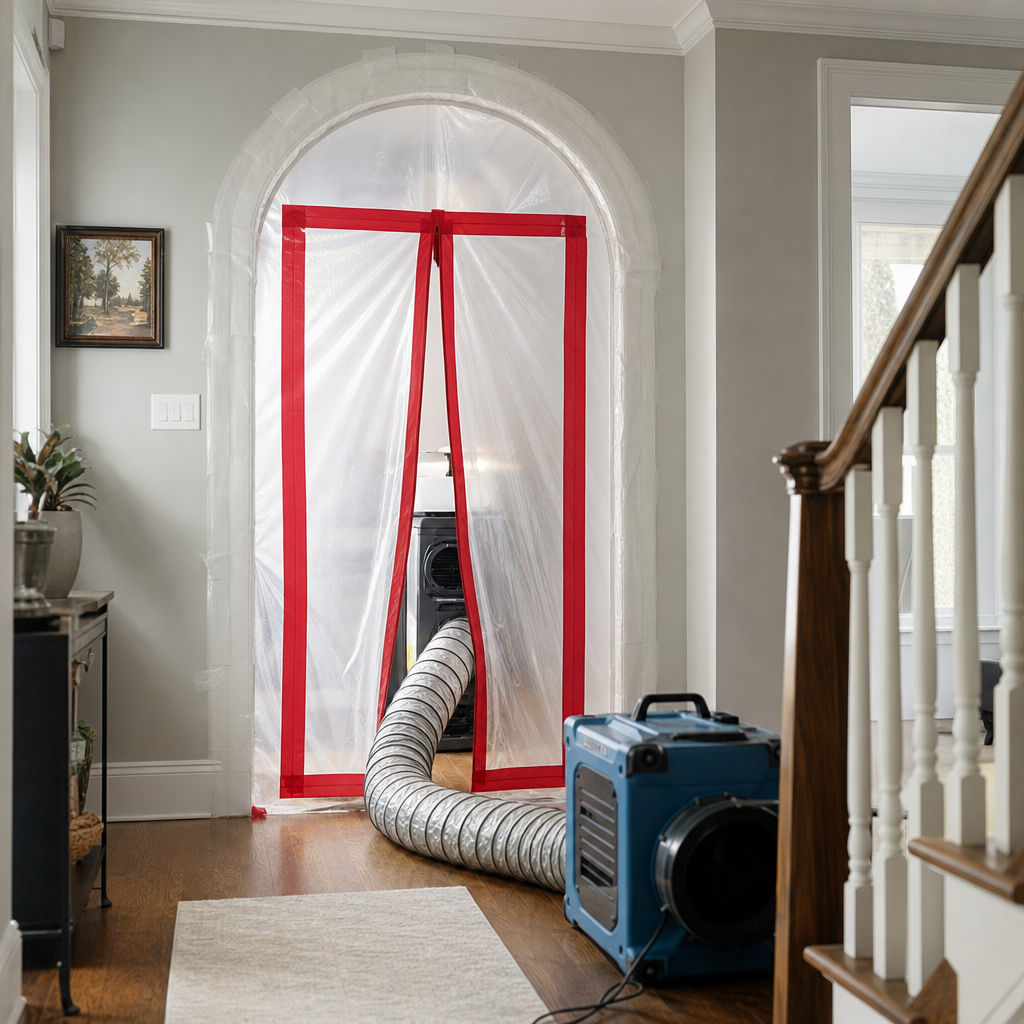
Insurance companies scrutinize mold claims because microbial remediation requires specialized containment and air monitoring, driving up settlement costs. Knowing why adjusters deny claims helps you gather the right proof from day one.
Maintenance Exclusions vs. Sudden Water Damage
The primary reason adjusters deny mold claims is the maintenance exclusion clause. If an adjuster inspects a water-damaged ceiling and spots rusted drywall screws, decayed lath, or rings of layered water stains, they will write that the leak was a gradual, pre-existing issue. To overturn this assessment, you need verifiable proof showing that moisture spiked suddenly and that remediation started immediately.
Moisture Tracking: Objective Evidence of Water Loss
Subjective statements like “the basement smelled dry” hold no weight with insurance adjusters. The only evidence that consistently overcomes maintenance-based claim denials is psychrometric logging. This involves recording daily data points including:
- Ambient air temperature and relative humidity inside and outside the containment area.
- Grains per pound (GPP) calculations showing specific moisture content in the air.
- Moisture content percentages in wood framing, concrete, and subfloors.
When daily psychrometric charts demonstrate that structural drying equipment was placed immediately and successfully lowered material moisture to baseline levels, the carrier cannot claim you allowed standing water to sit unattended.
Navigating Shared Wall Cavities in Attached Properties
For brownstones, townhomes, and attached brick residences in neighborhoods like Canarsie, Flatlands, and Crown Heights, water easily migrates through shared party walls. If your neighbor experiences a second-floor plumbing rupture, water and mold spores can travel across shared joist pockets into your home. Proving which side of the party wall originated the leak requires immediate thermal imaging and moisture readings along the common boundary line to prevent prolonged liability disputes between separate insurance companies.[4]
Water Damage and Mold Remediation Costs
Need does insurance cover mold from water damage?
We’re available now - call for a fast, free estimate.
When insurance covers a mold loss, your primary out-of-pocket expense is your policy deductible, provided the total remediation bill falls within your mold endorsement cap. When mold is excluded or exceeds policy limits, the homeowner must cover the remainder directly.
Restoration and Remediation Factors
The total cost of water and mold restoration depends on four primary factors:
- Water Category: Clean supply line water (Category 1) costs less to extract and clean than contaminated groundwater or sewer backups (Category 3).
- Containment Requirements: True remediation requires physical polyethylene barriers and negative air pressure machines equipped with HEPA filtration to keep spores from cross-contaminating clean living areas.
- Demolition and Disposal: Non-salvageable materials like soaked insulation, carpet padding, and mold-colonized drywall must be bagged, sealed, and disposed of under local environmental guidelines.
- Rebuild and Build-Back: Replacing subfloors, hanging fresh drywall, applying antimicrobial primer, and reinstalling trim back to pre-loss condition.
Deductibles, Sublimits, and Endorsement Terms
Review your policy declarations page for the exact terms on fungus, wet rot, and bacteria. If your policy has a $5,000 mold sublimit and your professional remediation invoice totals $8,200, the insurer will pay up to the $5,000 cap minus your deductible, leaving the remaining balance to you. Working with a restoration contractor that provides line-item scopes using standard carrier pricing ensures you do not encounter inflated billing or surprise out-of-pocket charges.
How to Document and File a Water Damage Mold Claim
To give your claim the best chance of full approval, follow these direct operational steps from the moment you spot water or mold growth:
-
Step 1: Stop the Source and Document Damage
Shut off your property’s main water valve immediately if the issue is an active plumbing leak. Before throwing anything away, take wide-angle and close-up videos of all standing water, wet furniture, and affected walls. Keep the defective pipe fitting, split hose, or broken valve stem so the insurance adjuster can inspect the physical cause of loss.
-
Step 2: Begin Professional Mitigation Promptly
Contact a certified restoration firm such as Floodline Restoration Co. promptly. Professional teams will extract standing water, install commercial air movers and dehumidifiers, and isolate any active mold with plastic containment barriers. Prompt documentation, notification, and reasonable mitigation demonstrate that you met your obligation to protect the property.
-
Step 3: Submit an Itemized Scope of Work and Supporting Records
Provide your insurer with a detailed, itemized scope of work containing daily moisture readings, equipment placement logs, and clear photographic proof. Clear, objective documentation stops adjusters from writing off sudden water damage as long-term neglect and accelerates your settlement payout.
Frequently Asked Questions About Water and Mold Insurance Claims
How does insurance coverage for mold work?
Some policies provide limited coverage for mold resulting from a covered water loss, such as a sudden pipe burst or appliance failure. Mold is commonly excluded or limited, so the policy’s exclusions, endorsements, sublimits, deductible, and cause-of-loss requirements control.
Does standard flood insurance cover mold after a storm?
Under National Flood Insurance Program (NFIP) policies, flood cleanup, structural drying, and anti-microbial treatments are typically covered as direct flood damage mitigation, whereas mold testing and broader mold remediation are commonly excluded, subject to policy guidelines and reasonable mitigation efforts.
How fast should water extraction begin to protect a claim?
Policyholders should pursue prompt documentation, insurer notification, and reasonable mitigation as soon as it is safe to do so. While general mitigation guidance notes that mold can begin growing quickly in damp environments, insurance policies require reasonable steps to prevent further damage rather than establishing a universal legal deadline.
Can an insurer require policyholders to use a preferred contractor?
Policyholders typically have the option to hire an independent, certified restoration contractor, though policy terms and insurer preferred-vendor programs can vary depending on state regulations and individual contract provisions.
Need does insurance cover mold from water damage?
We’re available now - call for a fast, free estimate.
Sources
- – MOLD: A GROWING PROBLEM – govinfo.gov (2002)
- When are water damage and mold covered by insurance? – tdi.texas.gov
- Roof Leak Insurance Claims (2026): Frequency & Cost – theroofingbrief.com (2026)
- Does Homeowners Insurance Cover Roof Leaks? (2026) – smartamericanliving.com (2026)
- Microsoft Word – Mold.doc – iii.org (2002)
Related reading: Homeowners Insurance Water Damage – Call Now-10% Off – Same-Day Service – Free Estimate
Related reading: Is Water Damage Covered By Homeowners Insurance – Call Now-10% Off – Same-Day Service – Free Estimate
Related reading: Water Damage Insurance Coverage – 10% Off & Free Estimate – Same-Day Service
Frequently Asked Questions
What should I do if mold remediation costs exceed my insurance policy sublimit?
If cleanup costs exceed your mold endorsement cap, structural drying, demolition, and rebuild work can often still be billed under your broader dwelling coverage. Floodline Restoration Co. structures line-item scopes to separate structural repairs from microbial limits, helping policyholders maximize coverage and reduce out-of-pocket costs.
How does psychrometric moisture logging prevent an insurance claim denial for mold?
Psychrometric logs provide daily data on relative humidity, grains per pound (GPP), and material moisture content, delivering objective proof that moisture spiked suddenly from a covered peril. These verified drying logs prevent adjusters from attributing fungal growth to pre-existing conditions or deferred maintenance. Property owners can contact Floodline Restoration Co. for rapid dispatch to establish immediate baseline moisture tracking.
Does homeowners insurance cover mold cleanup if the leak originated from an attached neighbor's wall?
Coverage depends on establishing the exact origin and timeline of the water intrusion across the shared boundary. Certified restorers like Floodline Restoration Co. use thermal imaging and moisture mapping along party walls to pinpoint the source, providing the documentation required to settle inter-carrier liability disputes quickly.
About the author
 |
Sarah Miller Sarah Miller is a certified water damage restoration specialist with over eight years of experience serving the Canarsie, NY area. Holding a degree in Environmental Science from Brooklyn College, she specializes in emergency response protocols and navigating complex insurance claims for both residential and commercial properties. Her practical expertise helps property owners understand the nuances of restoration costs and effective prevention strategies. |
Water damage, flood, or mold emergency?
We’re available now - call for a fast, free estimate.
Call Now - Free Estimate