
Quick Summary
Mastering how to dry flooded basement areas quickly is vital for preventing long-term structural decay and hazardous mold growth within the critical 24- to 48-hour window. Complete recovery requires securing electrical safety, rapidly extracting standing water, stripping waterlogged porous materials, and deploying industrial dehumidification and moisture verification from Floodline Restoration Co. Readers will gain a clear roadmap for safe DIY water removal and understand how to contact Floodline Restoration Co.'s 24/7 dispatch for an immediate 45-minute emergency response and a free on-site visual inspection.
How to Dry Flooded Basement: Fast, Safe Water Removal Guide
When a basement floods, every minute counts. Do not reenter until structural, electrical, and other physical hazards have been confirmed safe. Mold can begin growing when materials remain wet, so the EPA recommends cleaning and drying the area and contents within 24 to 48 hours when possible to help prevent mold growth. According to specialists at Floodline Restoration Co., getting the space dry requires a methodical process: confirming safety, removing standing water and saturated materials, ventilating, and running dehumidifiers.[1]
Action Checklist for a Flooded Basement
Before bringing in equipment, follow these fundamental priorities to manage the emergency safely and effectively:
- Verify Safety Before Entry: Do not reenter until structural, electrical, and other physical hazards have been confirmed safe. Never step into standing water. Shut off power to the basement at the main breaker panel first, or have your utility provider disconnect service if the panel is in the flooded area.
- Stop the Water Source: Shut off the main water valve for plumbing breaks, or monitor exterior drainage and sump basins during heavy storms.
- Pump Out Standing Water: Use pumps and wet-dry vacuums to remove bulk water as quickly as possible.
- Remove Saturated Porous Materials: Remove wet drywall, carpeting, and other waterlogged materials so trapped moisture can escape.
- Establish Drying and Ventilation: Open windows and doors for ventilation when outdoor conditions allow, and use dehumidifiers to remove moisture from the air. Fans can help only after electrical safety is confirmed, and avoid using them where visible mold could be spread through the air.
Essential Safety Gear and Equipment
Working in a flooded basement exposes you to potential electrical hazards, contaminants, and airborne particles. Assemble these items before starting:
- Personal Protective Equipment: Protective waterproof boots, gloves, eye protection, and respiratory protection.
- Water Extraction Tools: Submersible pumps, discharge hoses, and a wet-dry vacuum.
- Drying Equipment: Dehumidifiers, fans, and extension cords suitable for damp environments.
- Diagnostic Tools: A moisture meter to track drying progress.
Step 1: Ensure Electrical and Structural Safety Before Entry
Flooded basements present serious hazards that must be addressed before cleanup begins. Do not reenter until structural, electrical, and other physical hazards have been confirmed safe.
Eliminating Electrocution and Contamination Hazards
- Shut Off Power: If your electrical panel is upstairs, turn off the breakers controlling the basement. If the panel is located in the basement and water has reached near or above electrical outlets, contact your local electric utility to disconnect power before you enter.
- Assess Water Contamination: Floodwater and sewage backups carry biological and physical contaminants that require extra precautions and may necessitate professional remediation.
Assessing Structural Stability
Hydrostatic pressure from saturated soil can damage foundation walls. Before entering, inspect exterior walls, floor joists, and support posts for bowing, shifting, or major cracks. If structural damage is visible, do not enter and consult a qualified professional.
Step 2: Rapid Standing Water Extraction
Removing standing water quickly stops moisture from penetrating deeper into building materials.[2]
- Position Submersible Pumps: Place pumps at low points on the floor slab. Run discharge hoses outside, directing runoff away from the foundation on a downward slope.
- Extract Remaining Pools: Switch to a wet-dry vacuum to remove shallow puddles and residual water from low spots on the floor.
Step 3: Remove Saturated Porous Materials
Porous materials hold moisture and can delay the drying process if left in place.
- Remove Wet Drywall: Cut away water-damaged gypsum board above the water level to expose wall cavities and allow air to reach framing materials.
- Remove Saturated Insulation: Wet insulation traps water and should be removed and discarded.
- Address Wet Flooring: Saturated carpeting and padding should be removed to allow the subfloor or slab to dry.
- Discard Saturated Porous Items: Wet cardboard, upholstered items, and other porous contents that cannot be dried promptly should be removed.
Step 4: Establish Dehumidification and Controlled Airflow
Need how to dry flooded basement?
We’re available now - call for a fast, free estimate.
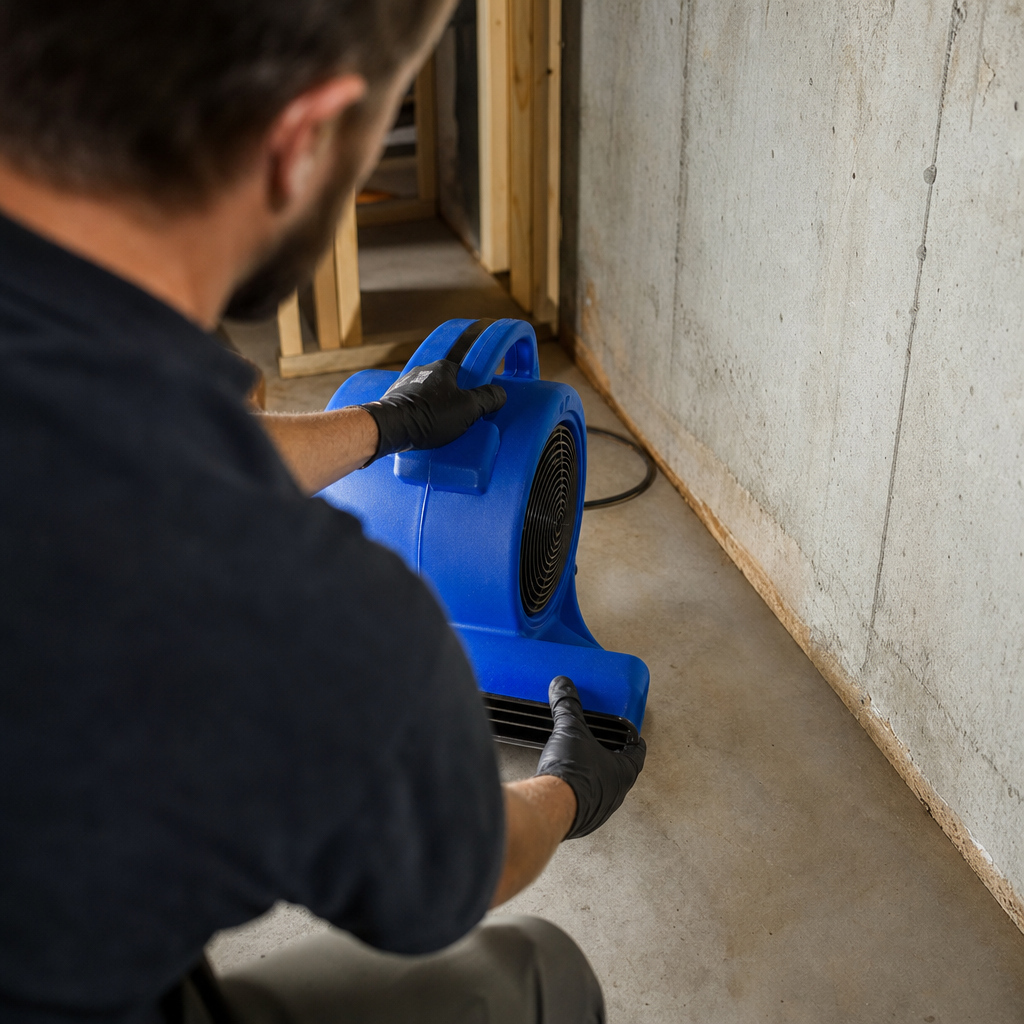
Proper air circulation and moisture removal are critical for thorough drying.
- Ventilate: Open windows and doors for ventilation when outdoor conditions allow, and use dehumidifiers to remove moisture from the air.
- Deploy Dehumidifiers: Run dehumidifiers continuously to extract moisture from the air and surrounding materials.
- Use Fans Safely: Fans can help only after electrical safety is confirmed, and avoid using them where visible mold could be spread through the air.
Step 5: Clean, Sanitize, and Prevent Mold Growth
Once standing water and saturated materials are removed, surfaces should be cleaned and dried thoroughly.
- Wash Hard Surfaces: Clean concrete slabs, walls, and framing with water and detergent to remove silt and debris.
- Apply Disinfectant: Treat affected surfaces with appropriate cleaning or sanitizing products according to manufacturer directions.
- Allow Full Drying: Ensure cleaned areas are allowed to dry completely before any rebuilding begins.
Step 6: Measure and Verify Moisture in Materials
Technicians at Floodline Restoration Co. note that building materials often look dry on the surface long before they are dry internally. Sealing or refinishing before materials reach acceptable levels can trap moisture.[4]
Moisture Testing
Materials should generally read 15% or less before refinishing, while recognizing that the brief does not establish a universal threshold for every structural member.
A plastic-sheet test, where a piece of clear plastic is taped to a concrete floor, can serve as a way to identify remaining moisture, though it is not a definitive installation clearance test. If condensation forms beneath the plastic, moisture is still present in the slab.
Component Recovery Considerations
Different materials require different approaches during water damage recovery:
Drywall and Ceilings
Remove wet drywall to allow framing to dry. If water came from above, check ceiling cavities and ensure joists are dry before repairing.
Flooring Materials
Flooring materials that trap water over concrete or wood subfloors may need to be removed to allow the underlying structure to dry properly.
Structural Framing
Wood framing should be thoroughly dried and checked with a moisture meter before installing new insulation or wall coverings.
Frequently Asked Questions
How fast does mold grow after a basement floods?
Mold can begin growing when materials remain wet, so the EPA recommends cleaning and drying the area and contents within 24 to 48 hours when possible to help prevent mold growth.[3]
What equipment is needed to dry out a flooded basement?
Basic equipment includes pumps, a wet-dry vacuum, dehumidifiers, fans (used only after electrical safety is verified), protective gear, and a moisture meter.
Should I open windows or use a dehumidifier for basement drying?
Open windows and doors for ventilation when outdoor conditions allow, and use dehumidifiers to remove moisture from the air.
Can I dry a flooded basement myself or do I need professional restoration?
You should seek professional help from a qualified service like Floodline Restoration Co. in cases involving contaminated water, electrical or HVAC involvement, extensive mold, or situations that cannot be dried promptly.
How do I remove water from carpet and drywall in a flooded basement?
Saturated carpet, padding, and damaged drywall should generally be removed so the surrounding framing and flooring can dry completely.
How long does it typically take to completely dry a flooded basement?
Drying can take several days to weeks, even when fans, dehumidifiers, ventilation, and open doors or windows are used.[5]
Need how to dry flooded basement?
We’re available now - call for a fast, free estimate.
Sources
- Fact Sheet Flood Cleanup Avoiding Indoor Air Quality Problems Revised – nepis.epa.gov (2012)
- [PDF] homeowner's and renter's guide to mold cleanup after disasters | epa – epa.gov (2015)
- Homeowner's and Renter's Guide to Mold Cleanup After Disasters – nepis.epa.gov
- Flood Cleanup to Protect Indoor Air and Your Health – epa.gov
- Flood Cleanup: Avoiding Indoor Air Quality Problems – in.gov
Related reading: Basement Water Extraction | 10% Off & Free Estimate | Same-Day Service
Frequently Asked Questions
How do you detect trapped moisture inside basement concrete and framing before rebuilding?
Surface materials often dry faster than structural cores, making basic visual checks insufficient for preventing hidden rot and mold. Floodline Restoration Co. deploys advanced diagnostic tools and daily moisture mapping to ensure framing and concrete slabs reach safe levels before repairs begin.
When should you stop DIY drying and call professional water mitigation services?
You should seek professional extraction immediately if floodwater touches electrical systems, involves sewage or storm runoff, or cannot be fully cleared within 24 hours. Floodline Restoration Co. offers 24/7 live dispatch with a 45-minute emergency response to deploy industrial drying equipment before hazardous mold colonizes.
Does homeowners insurance cover emergency flooded basement drying and water removal?
Standard homeowners policies typically cover sudden, accidental pipe bursts, while ground flooding or sewer backups usually require specific policy endorsements. Floodline Restoration Co. provides a free on-site visual inspection and direct insurance documentation, providing certified drying logs to support your claim.
About the author
 |
Marcus Thorne Marcus Thorne is a certified restoration specialist with over a decade of hands-on experience in emergency water and mold mitigation. Drawing on a background in construction management from the New York Institute of Technology, he translates complex restoration procedures into actionable advice for property owners navigating unexpected damage. |
Water damage, flood, or mold emergency?
We’re available now - call for a fast, free estimate.
Call Now - Free Estimate