
Quick Summary
Effective mold cleanup after flood damage requires taking immediate action within 24 to 48 hours to extract standing water and remove compromised porous materials before fungal colonies establish. Instead of relying on ineffective DIY bleach treatments, Floodline Restoration Co. utilizes professional containment barriers, negative air pressure, and commercial dehumidification to safely remediate structural moisture without spreading spores. Homeowners will understand the critical steps of post-flood structural drying and can call Floodline Restoration Co. 24/7 for a free visual inspection and emergency moisture assessment.
Mold Cleanup After Flood: Fast Removal and Safe Drying
When floodwater enters a home, the clock starts immediately. Mold spores exist naturally in indoor air, but they require standing moisture and an organic food source to germinate. Standing water and wet materials can support mold, bacteria, and viruses and may cause disease, trigger allergic reactions, and damage building materials. Rapid removal of standing water and thorough drying are central steps for reducing moisture-related damage and mold growth.[4]
Mold can begin growing on wet materials within about 24 hours, and the EPA recommends drying homes and belongings within 24 to 48 hours. The U.S. Environmental Protection Agency (EPA) recommends removing and discarding porous building materials that remain wet for more than 24 to 48 hours. Managing flood damage requires far more than running household fans, and specialists like Floodline Restoration Co. emphasize prompt water extraction and proper structural drying.[1]
How Quickly Does Mold Grow After a Flood?
Mold can begin growing on wet materials within about 24 hours, and the EPA recommends drying homes and belongings within 24 to 48 hours. In a survey of 107 homes in greater New Orleans, visible mold growth was found in 49 homes, or 44%. Approximately 16% of surveyed homes had heavy visible mold coverage, defined as more than 50% coverage. Microscopic fungal colonies establish themselves rapidly on wet paper-faced drywall, carpet padding, and wood framing.[2]
Immediate Steps to Halt Spore Spreading
Taking direct action within the first two days prevents surface moisture from turning into an entrenched fungal outbreak:
- Extract standing water right away: Remove pooled water using commercial extraction equipment or wet vacuums rather than waiting for it to evaporate naturally.
- Tear out ruined porous materials: Cut away wet drywall, take up soaked carpeting, and pull out saturated fiberglass insulation that has stayed wet for more than 24 hours.
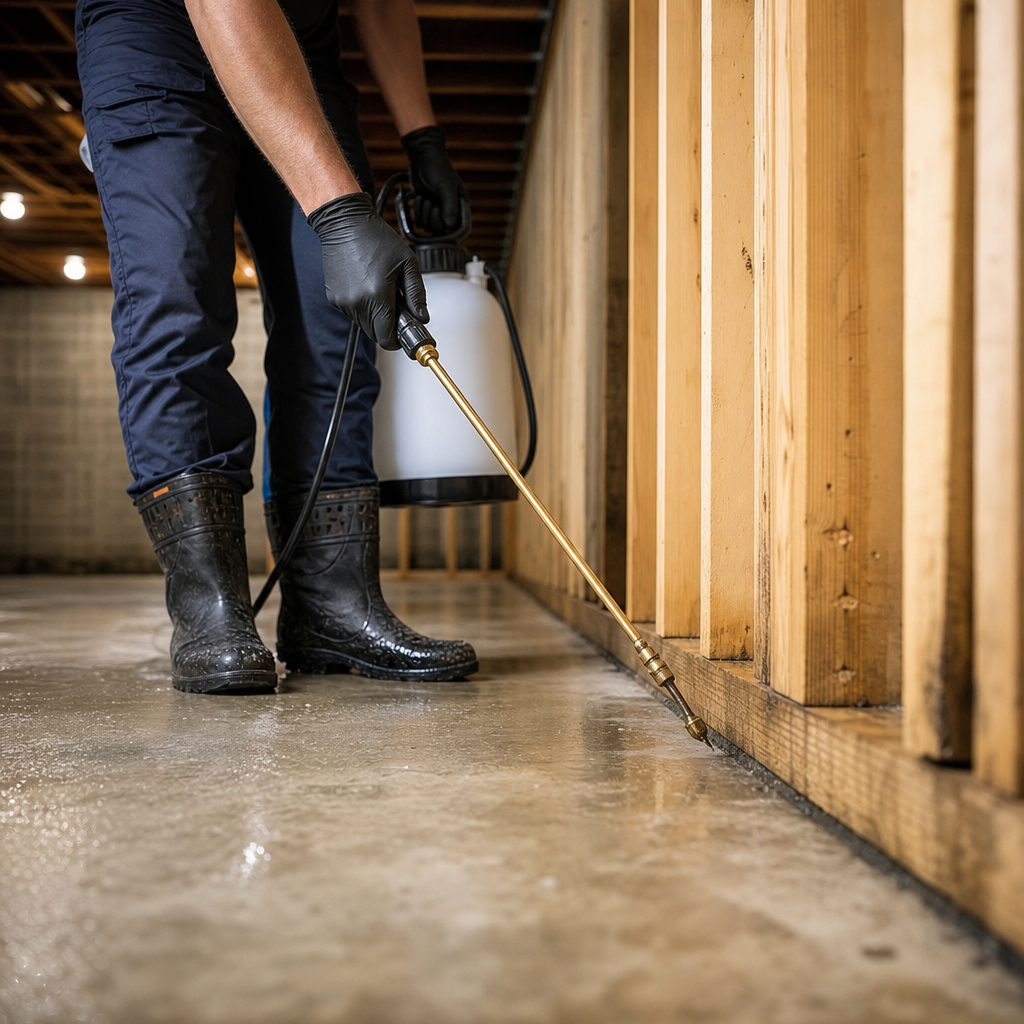
- Wash hard, nonporous surfaces: Scrub framing studs, concrete slabs, and tile with simple household detergent and clean water to remove silt and surface spores.
- Control indoor humidity: Run commercial dehumidifiers to pull moisture out of the air and accelerate structural drying before fungal colonies spread.
Can You Clean Flood Mold Yourself or Do You Need a Professional?
Need mold cleanup after flood?
We’re available now - call for a fast, free estimate.
Small areas on hard, nonporous surfaces may often be cleaned by a homeowner using detergent and water, ventilation, and appropriate protective equipment.
Professional help is advisable for extensive mold, heavily contaminated floodwater, porous materials that cannot be thoroughly dried, or situations involving occupants with health vulnerabilities.
- Contaminated water sources: Floodwater and sewage backups carry biological hazards that require specialized containment and cleanup protocols.
- Extensive structural growth: Mold covering large spans of walls, ceilings, or crawl spaces requires containment barriers and negative air pressure to avoid spreading spores through the house.
- Porous and structural materials: Large volumes of saturated structural framing and porous assemblies require specialized commercial drying equipment.
- Vulnerable residents: Anyone with asthma, chronic lung disease, or compromised immune systems should not remain inside a building undergoing mold remediation.
What Chemicals and Solutions Actually Kill Black Mold?
Routine mold cleanup should generally use detergent and water rather than biocides. If a disinfectant is used after floodwater cleanup, bleach must not be mixed with ammonia or other cleaners, and the area must be well ventilated.[3]
Effective mold cleanup after flood conditions relies on physical removal, moisture correction, and thorough drying:
- Detergent and clean water: Soap and water combined with physical scrubbing is recommended for cleaning nonporous and washable surfaces.
- Physical removal: Porous materials that cannot be dried and thoroughly cleaned must be discarded.
- Moisture correction and drying: Removing moisture sources and completely drying remaining materials prevents future mold growth.
What Does Mold Remediation Cost After a Flood?
Costs vary substantially with affected area, materials, contamination, demolition, drying, and testing, and a qualified provider should give an estimate after inspection.
Homeowners often ask if mold testing is necessary before pricing the job. According to the EPA, sampling is generally unnecessary when visible mold is already present. There are no federal limits or regulatory thresholds for indoor mold spore counts, so test results rarely change the fundamental scope of work: the moisture source must be removed, saturated materials must be discarded, and the structure must be dried thoroughly.[5]
Navigating Homeowners Insurance and Flood Claims
Standard homeowners insurance policies typically exclude water damage caused by external flooding, storm surges, or municipal drain backups unless the policyholder holds a separate flood insurance policy (such as through the National Flood Insurance Program) or an active sewer backup endorsement. Furthermore, insurance carriers often deny mold claims if they determine that the property owner neglected obvious water damage over an extended period.
To support your insurance claim, document every stage of the damage immediately:
- Take clear, wide-angle photos and close-up videos of high-water marks, damaged personal property, and visible mold growth before tearing anything out.
- Maintain daily drying logs with moisture meter readings taken from framing studs, concrete slabs, and subfloors.
- Request an itemized written estimate from a qualified restoration contractor such as Floodline Restoration Co. detailing the labor, drying equipment, and disposal costs.
How to Safely Dry Drywall, Subfloors, and Basements
Need mold cleanup after flood?
We’re available now - call for a fast, free estimate.
Proper drying requires a methodical teardown of damaged assemblies so moisture is not trapped inside wall cavities and subflooring systems.
Drywall and Insulation Tear-Out (The Flood Cut)
Drywall wicks water upward like a sponge. When floodwaters rise two inches on the floor, moisture can travel a foot or more up the wall cavity. Restoration professionals perform a “flood cut,” cutting the drywall neatly 12 to 24 inches above the highest visible water mark. This exposes the wet framing studs and allows air to reach hidden pockets of moisture. All wet fiberglass or cellulose insulation behind the wall must be stripped out and bagged for disposal, as wet insulation cannot be dried in place and will rot adjacent wood framing.
Drying Subfloors and Structural Framing
Plywood, oriented strand board (OSB), and solid wood floor joists dry at different rates. OSB subfloors swell and delaminate when submerged, often requiring complete replacement. Solid wood joists and wall plates can usually be saved if dried down to a moisture content below 15% before new drywall is installed. Technicians use commercial LGR (low-grain refrigerant) dehumidifiers and targeted air movers to draw out moisture bound within the grain of the wood.
Basement Floor and Sewer Backup Decontamination
Basements are particularly vulnerable to chronic dampness due to poor natural ventilation and moisture migration through porous foundation walls. When a basement flood involves municipal drain backups, raw sewage introduces dangerous biological hazards into concrete slabs and masonry. After liquid waste is extracted, concrete floors must be scrubbed and dried using high-capacity dehumidifiers to prevent structural colonization.
Avoiding Cross-Contamination During the Drying Process
One of the most dangerous DIY mistakes property owners make is setting up standard box fans in a mold-filled room. Directing high-velocity air across active mold colonies dislodges millions of microscopic spores, launching them into the air where they travel through HVAC ducts, stairwells, and hallways into clean areas of the home.
To prevent cross-contamination, professional crews like Floodline Restoration Co. follow strict engineering controls:
- Physical containment barriers: Sealing off work areas with heavy 6-mil poly sheeting and zipper doors keeps dust and spores isolated to the flood zone.
- Negative air pressure: Commercial air scrubbers vent scrubbed air outdoors, creating a vacuum that prevents airborne particles from drifting into occupied rooms.
- Controlled air direction: Air movers are only introduced after visible mold colonies have been physically removed or wiped down, ensuring airflow accelerates evaporation from bare framing without spreading contaminants.
If your property has suffered water damage from a storm, pipe break, or sewage backup, acting within the first 24 to 48 hours is essential to dry the structure safely and mitigate mold growth.
Frequently Asked Questions About Flood Mold Cleanup
How quickly does mold grow after a flood?
Mold can begin growing on wet materials within about 24 hours, and the EPA recommends drying homes and belongings within 24 to 48 hours.
Can I clean up flood mold myself or do I need a professional?
Small areas on hard, nonporous surfaces may often be cleaned by a homeowner using detergent and water, ventilation, and appropriate protective equipment. Professional help is advisable for extensive mold, heavily contaminated floodwater, porous materials that cannot be thoroughly dried, or situations involving occupants with health vulnerabilities.
What chemicals kill black mold after water damage?
Routine mold cleanup should generally use detergent and water rather than biocides. If a disinfectant is used after floodwater cleanup, bleach must not be mixed with ammonia or other cleaners, and the area must be well ventilated. Cleanup should emphasize physical removal, moisture correction, and drying.
How much does professional flood mold remediation cost?
Costs vary substantially with affected area, materials, contamination, demolition, drying, and testing, and a qualified provider should give an estimate after inspection.
Does homeowners insurance cover mold removal after flooding?
Standard homeowners policies rarely cover mold resulting from external floodwaters or storm surges unless you carry separate flood insurance or specific sewer backup riders. Mold resulting from sudden, internal plumbing failures is more likely to be covered, provided the issue was reported and addressed promptly.
How do I safely dry out drywall and subfloors to prevent mold?
Cut away drywall and insulation 12 to 24 inches above the water line to open wall cavities. Remove saturated floor coverings and run commercial dehumidifiers alongside proper air movers to dry framing lumber down to a safe moisture content (under 15%) before rebuilding.
Need mold cleanup after flood?
We’re available now - call for a fast, free estimate.
Sources
- [PDF] Mold: Worker and Employer Guide to Hazards and Recommended … – epa.gov (2056)
- Resident cleanup activities, characteristics of flood- … – stacks.cdc.gov (2008)
- Details: – stacks.cdc.gov (2008)
- Flood Cleanup: Avoiding Indoor Air Quality Problems – in.gov (2003)
- Mold | Louisiana Department of Health – ldh.la.gov (2017)
Related reading: Basement Flood Cleanup Cost – 10% Off & Free Estimate – Same-Day Service
Related reading: Professional Mold Removal Cost – Call Now-10% Off – Same-Day Service – Free Estimate
Related reading: Top Rated Water Damage Canarsie | Call Now-10% Off | Same-Day Service | Free Estimate
Frequently Asked Questions
How do I know structural framing is dry enough to safely close up walls after a flood?
Wood framing and structural joists must reach a calibrated moisture content below 15% before installing new insulation and drywall to prevent hidden mold colonies from forming. Relying solely on touch or surface appearance is risky, as deep core moisture often lingers inside saturated wall studs. Floodline Restoration Co. provides emergency moisture assessments using professional meters to confirm structural materials are completely dry before reconstruction begins.
Why is using household bleach ineffective for post-flood mold cleanup on wood?
Bleach only treats surface growth on nonporous materials and cannot penetrate porous wood framing, leaving the fungal root systems intact beneath the surface. Furthermore, the water content in bleach solutions can actually feed the surviving roots and accelerate regrowth inside damp wall cavities. Professional remediators like Floodline Restoration Co. rely on physical removal, negative air containment, and deep commercial drying rather than superficial chemical treatments.
How long does the structural drying and mold prevention process typically take after a flood?
Complete structural drying generally takes between 3 to 5 days when using commercial low-grain refrigerant dehumidifiers and high-velocity air movers. The exact timeline depends on the volume of standing water, the saturation level of subfloors, and indoor humidity conditions. Floodline Restoration Co. maintains daily drying logs and moisture readings throughout the process to ensure the building envelope is stabilized before containment barriers are removed.
About the author
 |
Marcus Thorne Marcus Thorne is a certified restoration specialist with over a decade of hands-on experience in emergency water and mold mitigation. Drawing on a background in construction management from the New York Institute of Technology, he translates complex restoration procedures into actionable advice for property owners navigating unexpected damage. |
Water damage, flood, or mold emergency?
We’re available now - call for a fast, free estimate.
Call Now - Free Estimate