
Quick Summary
Raw wastewater backups present severe biological and structural hazards, making immediate mitigation and transparent sewage cleanup cost evaluation critical for property owners. Floodline Restoration Co. details realistic restoration costs between $1,800 and $4,500 while delivering rapid biohazard extraction, hospital-grade disinfection, and complete insurance claim management. Homeowners facing an active backup can call Floodline Restoration Co. for immediate 24/7 live dispatch and secure a free on-site visual inspection with an itemized remediation estimate.
Sewage Cleanup Cost: Fast Pricing and Emergency Response
When raw sewage backs up into a basement or living area, property owners face an urgent biohazard and immediate structural risk. The cost to clean up sewage depends primarily on the volume of standing wastewater, how deeply it penetrated structural materials, and how quickly extraction begins. An unexpected backup inside your home is an emergency that requires rapid biohazard remediation, distinct from routine municipal utility service.[3]
Floodline Restoration Co. provides direct emergency dispatch across Canarsie and surrounding Brooklyn neighborhoods. When you call our 24/7 line, you speak with local staff rather than an automated answering service. Our in-house, IICRC-certified technicians perform a visual inspection and provide a transparent, itemized scope of work before turning on equipment. We track moisture levels daily and document every step with infrared imaging.
Sewage Cleanup Cost: Factors, Response, and Scope
Sewage Cleanup Cost: Summary: Professional sewage damage restoration costs vary sharply by severity, with estimates ranging from a few thousand dollars for localized spills to tens of thousands of dollars for widespread, multi-room backups. Category 3 black water demands specialized containment, antimicrobial treatments, and controlled structural drying to stop bacterial growth and prevent deep structural rot.[2]
Sewage remediation costs vary significantly depending on the severity of the damage and the porous materials affected. Unlike clean water leaks from a supply line, raw sewage is classified as Category 3 black water. Pricing reflects the labor, hazardous waste disposal, personal protective equipment (PPE), and industrial drying gear required to return the property to safe, sanitary conditions.
Key Sewage Cleanup Pricing Benchmarks
Emergency restoration pricing reflects the scope of contamination rather than flat contractor rates. Estimated costs vary sharply depending on severity, ranging from a few thousand dollars for minor, contained wastewater backups to tens of thousands of dollars for major municipal sewer main backups or storm-driven backflows that submerge basement mechanicals. Fast response directly controls these costs by stopping contaminated water before it wicks deep into structural framing.[1]
Category 3 Black Water Cleanup and Structural Containment
Black water contains active pathogens, including bacteria, viruses, and parasites. Remediating it safely requires hospital-grade antimicrobial washdowns, physical containment barriers, and negative-pressure HEPA air scrubbers. In urban attached housing, standard estimates often miss the full picture. Porous brick party walls and continuous sill plates pull contaminated water sideways into adjoining units, quickly spreading the damage. Floodline Restoration Co. maps this moisture movement immediately to protect structural wood before framing rots.
What Does Sewage Cleanup Cost? Complete Restoration Pricing
Every sewage backup cleanup cost breakdown covers four main phases: biohazard containment, black water extraction, sanitization of salvageable framing, and controlled structural drying. Because Category 3 water ruins porous building materials, costs also include cutting away soaked drywall, pulling saturated carpeting, and hauling contaminated waste to licensed disposal facilities.
Comparing Water Damage Categories and Remediation Costs
Water mitigation costs change dramatically based on the water category involved. Clean water from a broken supply pipe requires basic extraction and drying, while raw sewage demands strict biohazard protocols and mandatory demolition of porous surfaces.
| Feature | Clean Water (Category 1) | Grey Water (Category 2) | Black Water (Category 3) |
|---|---|---|---|
| Biohazard Level | None detected | Moderate (Chemical/Biological) | Severe (Active Pathogens) |
| Estimated Cost | Lower baseline | Moderate baseline | Varies sharply (few thousand to tens of thousands of dollars) |
| Drywall Salvage | High (Can be dried in place) | Conditional | Unsalvageable (Mandatory flood cut) |
| Porous Carpet Disposal | Optional if dried quickly | Pad replaced, carpet cleaned | Mandatory removal and disposal |
| Protective Gear Required | Standard work boots/gloves | Gloves, boots, eye protection | Full Hazmat suits and respirators |
Understanding Clean Water Extraction vs. Black Water Removal
Basic formulas rarely account for how wastewater moves through dense residential architecture. When waste backs up through floor drains in attached homes, the water spreads horizontally into wall cavities and under baseboards. Attempting DIY cleanup with shop vacuums or household fans spreads airborne pathogens throughout the living space and leaves standing water trapped inside wall cavities.
Floodline Restoration Co. conducts a clear visual inspection on-site and provides an itemized written scope before starting work. Our technicians record daily moisture readings to ensure every step is backed by solid documentation.
The Attached-Structure Multiplier: Hidden Costs in Party Walls
Party walls in attached brick homes, brownstones, and semi-detached properties create serious structural challenges during a sewage backup. Porous brick masonry and shared wooden floor framing draw dirty water across property lines through capillary action. Standard restoration estimates that treat a room like an isolated box consistently overlook these hidden pathways, leading to expensive secondary damage weeks later.
How Capillary Action Draws Sewage Across Shared Brick and Framing
When sewage backs up against a shared masonry wall, old mortar joints and continuous wood subfloors pull moisture inward like a sponge. Wastewater travels laterally along sill plates long before water stains show up on a neighbor’s drywall. If left unaddressed, trapped black water rots load-bearing joists, breeds toxic mold inside shared cavities, and exposes neighboring residents to dangerous sewer gases.
Mitigating Cross-Property Contamination in Urban Buildings
Stopping sewage from migrating through shared walls requires specific diagnostic steps before cutting open building materials:
- Thermal and Moisture Mapping: Non-invasive infrared imaging identifies moisture tracks inside party-wall cavities without making unnecessary holes.
- Negative Air Pressure Isolation: Containment zones depressurize the workspace to prevent foul odors and airborne bioaerosols from drifting into adjacent homes.
- Direct Cavity Sanitization: EPA-registered antimicrobials injected into framing voids neutralize bacteria and protect structural framing from dry rot.
Evaluating the true sewage cleanup cost Canarsie property owners face means accounting for shared walls right away. Our inspection identifies party-wall migration early, preventing neighbor disputes and protecting structural integrity.[4]
Basement and Crawl Space Sewage Extraction: Repair vs. Replace
The cost to clean up sewage in basement spaces depends on what can be safely sanitized versus what must be thrown out. While concrete floors can usually be deep-cleaned and treated with biocides, submerged electrical systems and porous appliances require replacement to meet local building codes and eliminate fire hazards.
Evaluating Porous Concrete and Foundation Contamination
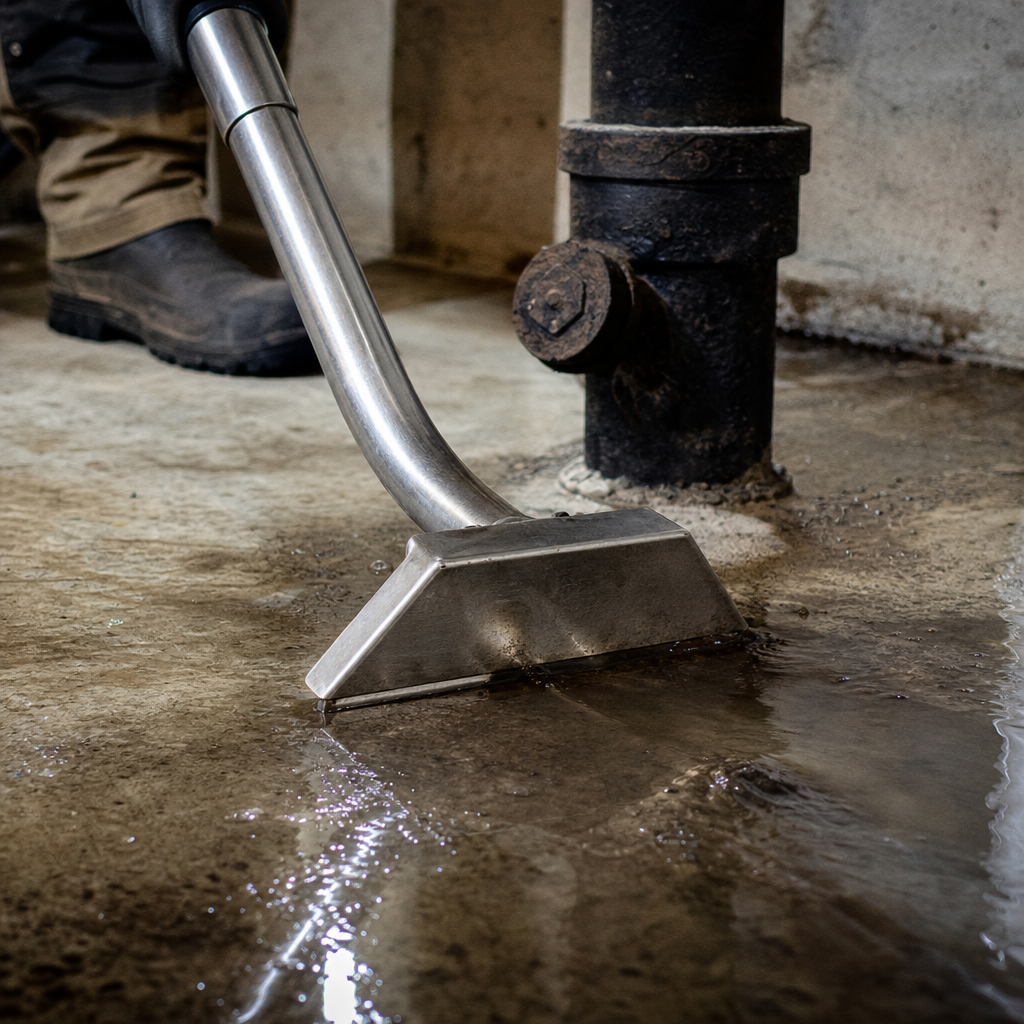
Unsealed concrete absorbs standing wastewater deep into its pore network. Simply mopping the surface leaves bacteria trapped below, creating stubborn sewer odors that seep through expansion joints and perimeter French drains over time. Professional technicians use heavy-duty rotary scrubbers and penetrating biocides to clean the slab down into the concrete pores.
HVAC and Mechanical Equipment Salvage Protocols
Basement mechanical units often determine whether a sewage remediation job remains moderate or becomes a major expense. Floodline Restoration Co. uses certified in-house teams to extract black water, decontaminate utility rooms, and dry structural elements according to strict safety standards.
| Basement Asset | Contamination Impact | Standard Remediation Protocol |
|---|---|---|
| Furnace and Water Heater | Submerged electrical wiring, gas valves, and fiberglass insulation | Mandatory replacement for safety and code compliance |
| Porous Concrete Slab | Bacterial penetration via capillary action | Deep extraction, penetrating biocide application, and rotary scrub |
| Perimeter French Drains | Biofilm buildup and trapped sewage residue | High-pressure antimicrobial flush and mechanical extraction |
| Solid Wood Framing | Surface contamination with slow liquid penetration | Antimicrobial wash, HEPA sanding, and commercial dehumidification |
Subfloor, Joist, and Drywall Decontamination: Salvage Decisions
Deciding which structural elements to keep depends directly on porosity. Drywall, carpet padding, and laminate flooring absorb contaminated water quickly and cannot be reliably sanitized. Solid dimensional lumber, subflooring, and structural joists, on the other hand, can frequently be saved if professional extraction and commercial drying begin quickly.
The 2-Foot Flood Cut Standard for Contaminated Drywall
Black water wicks up the paper backing and gypsum core of finished walls. Professional remediation standards dictate making a clean cut at least 24 inches above the highest visible water mark. This flood cut removes contaminated wallboard, exposes soaked wall cavities, and allows air movers to reach wet framing studs. We maintain photo logs and moisture readings during this process to ensure complete documentation.
Subfloor Sanitization and Structural Joist Restoration
Household bleach does not solve sewage contamination on wood framing. Chlorine stays on the surface while water soaks deeper into the wood, which can feed mold colonies down the road. Our three-step structural drying process preserves solid wood framing while controlling overall sewage damage restoration cost:
- Porous Material Removal: Strip saturated carpets, pads, and warped underlayment down to the solid subfloor.
- Antimicrobial Treatment: Apply EPA-registered biocides directly to floor joists and framing under negative-pressure air containment.
- Commercial Dehumidification: Run industrial low-grain refrigerant (LGR) dehumidifiers and high-velocity air movers until wood moisture content drops below 15%.
Frequently Asked Questions About Sewage Remediation Costs
Understanding the details of professional sewage sanitation pricing helps you make confident decisions during an emergency. Below are answers to common questions about costs and safety protocols.
How much does sewage cleanup cost on average?
Estimated professional sewage cleanup costs vary sharply by severity and can range from a few thousand dollars for minor, contained incidents to tens of thousands of dollars for severe backups that flood finished basements, damage mechanical equipment, or seep into party walls.[5]
How much does sewage cleanup cost in Canarsie and Brooklyn?
In Canarsie and nearby Brooklyn areas, high water tables, low-lying coastal terrain, and older attached housing stock influence pricing. When black water enters shared party walls or backs up through older combined sewer lines, extra containment and structural drying steps are required to protect adjacent properties.
Why should I avoid cleaning up sewage myself to save money?
Category 3 wastewater carries dangerous biological pathogens, including E. coli, Salmonella, hepatitis, and harmful parasites. Attempting DIY cleanup without proper containment, commercial extraction equipment, and respirators puts building occupants at risk of severe illness. Incomplete drying also traps moisture inside wall cavities, resulting in hidden mold and structural wood rot that costs far more to fix later on.
What is the cost difference between clean water extraction and black water cleanup?
Clean water extraction is generally less costly because materials can often be dried in place without specialized protective gear. Black water cleanup costs vary sharply by severity and can range from a few thousand dollars to tens of thousands of dollars due to required protective equipment, mandatory removal of porous materials, biohazard disposal fees, and hospital-grade sanitization treatments.
If you are dealing with a live sewage backup, contact Floodline Restoration Co. immediately for 24/7 emergency dispatch and an honest, itemized on-site estimate.
Sources
- Evaluation of Current Alternatives and Estimated Cost Curves for PFAS Removal and Destruction from Municipal Wastewater, Biosolids, Landfill Leachate, and Compost Contact Water – house.mn.gov (2023)
- Environmental Investments Cost Of A Clean Environment, Report Of … – nepis.epa.gov (2000)
- Wastewater Infrastructure Funding: Background and … – congress.gov
- Sewage Overflows – semspub.epa.gov
- Securing Wastewater Collection Systems from Accidental – tylermoore.ens.utulsa.edu (2012)
Frequently Asked Questions
Does standard homeowners insurance cover sewage cleanup costs?
Standard homeowners insurance policies typically exclude sewer backups unless your policy includes an optional water backup endorsement rider. Floodline Restoration Co. provides end-to-end insurance claim management, documenting damage with infrared mapping and itemized estimates to help maximize your carrier coverage.
How long does the sewage extraction and structural drying process take?
Complete sewage remediation typically takes 3 to 5 days depending on the volume of black water and building porosity. Floodline Restoration Co. deploys negative-air containment and industrial LGR dehumidifiers, tracking moisture daily until structural wood drops safely below a 15% moisture threshold.
Why do basement furnaces and water heaters require replacement after a sewage backup?
Category 3 black water contaminates internal wiring, safety valves, and porous fiberglass insulation that cannot be sanitized to sanitary building standards. Floodline Restoration Co. inspects basement mechanicals and logs flood heights to help adjusters authorize complete code-compliant replacements.
About the author
 |
Sarah Miller Sarah Miller is a certified water damage restoration specialist with over eight years of experience serving the Canarsie, NY area. Holding a degree in Environmental Science from Brooklyn College, she specializes in emergency response protocols and navigating complex insurance claims for both residential and commercial properties. Her practical expertise helps property owners understand the nuances of restoration costs and effective prevention strategies. |
Water damage, flood, or mold emergency?
We’re available now - call for a fast, free estimate.
Call Now - Free Estimate