
Water Damage Restoration What It Really Costs: What Canarsie Homeowners Pay in 2026
Most Canarsie homeowners will pay between $2,800 and $7,500 for a typical water damage restoration job in 2026, with small isolated leaks running closer to $1,200 and full basement floods with rebuild work reaching $15,000 or more. The spread is wide because water damage is never one job. It’s five or six jobs stacked together: extraction, drying, demo, treatment, and rebuild. If you’d rather skip the guesswork, call Floodline Restoration Co. at (716) 412-2972 and we’ll walk you through what your specific situation actually costs.
Why the National Averages You See Online Are Wrong for Canarsie
The most expensive water damage mistake in Canarsie isn’t the flood itself. It’s accepting the first adjuster estimate without knowing that “contents manipulation,” “antimicrobial application,” and “structural drying equipment” are standard billable line items that get quietly omitted when a homeowner doesn’t know to ask.
Here’s the thing about those national cost calculators you find on aggregator sites. They pull medians from everywhere: rural Ohio, suburban Texas, a condo in Phoenix. None of that reflects what a Brooklyn rowhouse actually costs to dry out. In Canarsie, most of the housing stock is attached or semi-detached. Shared walls mean shared moisture pathways. When a pipe lets go at 2 a.m. in a semi-detached off Flatlands Avenue, the water doesn’t respect the property line. It travels. That changes the scope, and the scope changes the invoice. We’ve been doing this since 2010, and we’ve never met a water job in this neighborhood that matched the national average. Not one.
Brooklyn labor rates in 2026 run higher than the national figures assume. Licensed restoration technicians, background-checked crews, professional-grade drying equipment: all of it costs more here because everything costs more here. A homeowner who budgets off a national median is already underfunded before the first fan gets plugged in.
What a Real Canarsie Invoice Looks Like: Phase-by-Phase Costs
Forget the single number. Water damage restoration is priced in phases, and each phase has its own realistic Brooklyn-market range for 2026. Here’s what we see on actual jobs in Canarsie, from the attached rowhouses along Avenue J to the semi-detached homes near Seaview Park.
Phase 1: Emergency Extraction ($400-$1,200)
This is the first hour. A crew arrives with truck-mounted or portable extraction units and pulls standing water out. In Canarsie, where basements are common and finished basements are everywhere, extraction typically runs $400 to $800 for a standard basement flood. Add in a second floor or crawlspace, and you’re pushing $1,000 to $1,200. This line item should include moving furniture and blocking it up, removing wet carpet padding, and pulling baseboards where needed.
Phase 2: Structural Drying ($900-$2,500 per 3-5 day cycle)
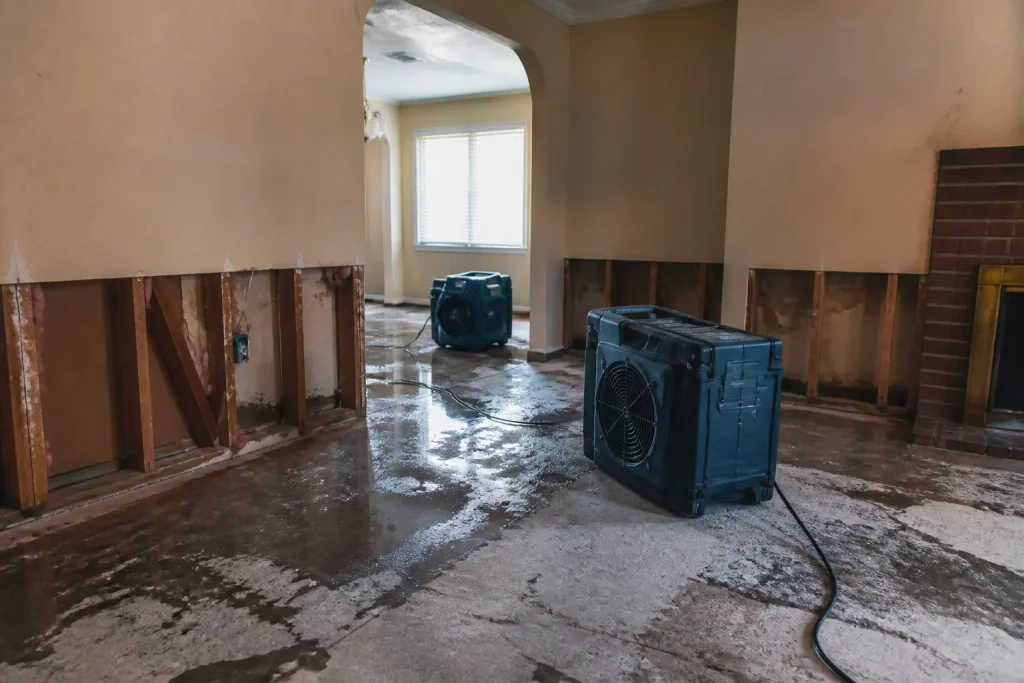
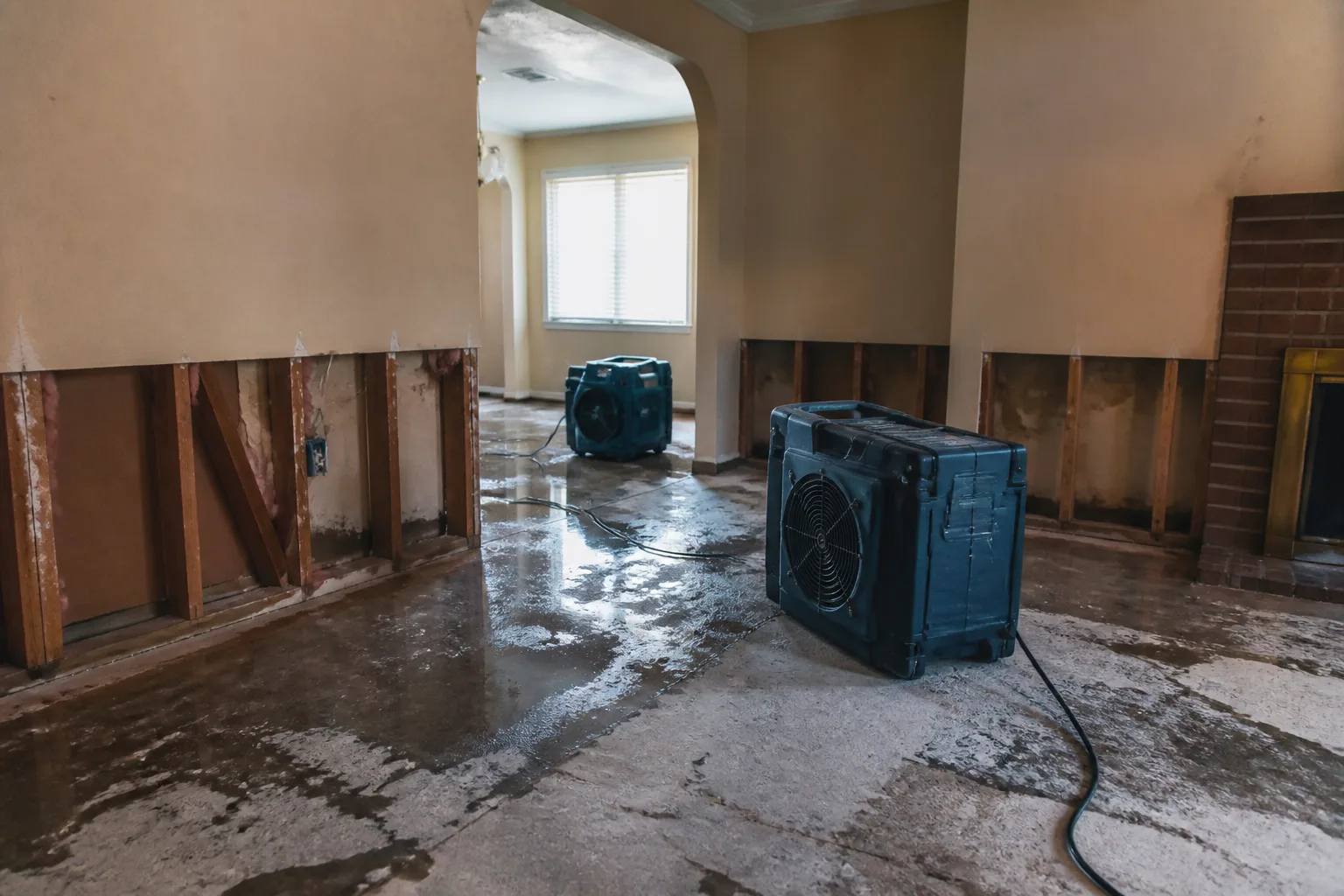
This is the phase most homeowners underestimate. Professional-grade drying isn’t a fan in the corner. It’s air movers, dehumidifiers, and injection systems working against a moisture map. Equipment rental is a per diem line item. In Brooklyn, expect $125 to $200 per day for a full equipment setup using Dri-Eaz, Phoenix, or XPOWER units. A standard Canarsie basement takes three to five days to hit the dry standard. That’s $900 to $2,500 just for the drying phase, and that’s before anyone swings a hammer.
Phase 3: Demolition & Removal ($500-$2,000)
Wet drywall, soaked insulation, warped flooring: it all comes out. In attached Canarsie housing, demo often runs higher than the national tables suggest because of the care required around shared walls. You can’t just rip into a party wall without understanding what’s on the other side. Realistic demo costs for a typical basement flood run $500 to $2,000, including disposal fees. Dump fees in Brooklyn are not the same as dump fees in Ohio.
Phase 4: Antimicrobial Treatment & Sanitization ($250-$750)
Every water job needs it, especially in older Canarsie homes where the water has been sitting against 50-year-old framing for a few hours. Antimicrobial application prevents the mold problem you don’t want to think about. This is a line item carriers routinely approve when the damage is sudden and accidental. Expect $250 to $750 depending on affected square footage.
Phase 5: Rebuild & Finish Work ($1,800-$8,000+)
New drywall, new flooring, paint, trim. This is where the invoice climbs, and where Canarsie’s housing stock matters most. A basic drywall patch and repaint might run $1,800 to $3,500. Full basement rebuild, including flooring, trim, and any electrical that got wet, runs $5,000 to $8,000 or more. The good news: this phase should be scoped in writing before work starts, with a clear line-item breakdown.
The Line Items Carriers Approve That Homeowners Leave on the Table
Here’s something we’ve learned after 42 years of serving local communities: the insurance carriers know exactly what a proper restoration costs. The problem is that most homeowners don’t. So when an adjuster writes an estimate, and the homeowner doesn’t know to ask, certain line items quietly disappear.
Here are the billable items that belong on a Canarsie water damage invoice, and that carriers routinely approve when documented properly:
- Contents manipulation. Moving furniture, blocking it up on foam risers, pulling wet boxes out of corners so drying can happen behind them. This is labor, it’s billable, and it’s often the first thing to go missing from a bare-bones estimate.
- Antimicrobial application. We mentioned it above. It’s a standard line item. If a company’s estimate doesn’t include it, ask why. Because the alternative, mold remediation down the road, costs a lot more. Our Mold Remediation in Canarsie page goes deeper on that.
- Equipment rental per diem. Drying equipment rental is charged by the day. More equipment means faster drying, but it also means higher per diem charges. A company that under-scopes drying equipment is saving the carrier money and costing you time. Time means more moisture absorption, which means more damage.
- Temporary climate control. In a Canarsie winter, a flooded basement with the door open during demo is a frozen basement. Temporary heaters and dehumidified air flow are billable. Carriers approve this. Homeowners who don’t know it exists don’t ask for it.
The Billing Question Most People Don’t Ask Until It’s Too Late
There are two ways restoration companies handle insurance billing, and the difference matters more than any line item on the estimate. Some companies require the homeowner to pay upfront and then chase the carrier for reimbursement. Other companies bill the carrier directly and let the homeowner stay out of that particular fight.
We bill the carrier directly. It’s how we’ve done it since 2010, and it matters because of cash flow. A $7,500 restoration job is a serious chunk of money for most Canarsie homeowners. When a company bills the carrier directly, the homeowner isn’t floating that cost for 30 to 60 days while the adjuster reviews the claim. The homeowner isn’t making phone calls to an insurance company that has no particular interest in moving faster. We handle that. It’s a square deal: no surprises on the bill, and the homeowner never plays messenger between us and the carrier.
If you’re comparing restoration companies in Canarsie, ask this exact question before you sign anything: “Do you bill my insurance company directly, or do I pay and seek reimbursement?” The answer tells you a lot about how the job will go.
How Canarsie’s Attached Housing Changes the Cost Equation
Canarsie’s housing stock is mostly attached rowhouses and semi-detached homes. That’s not neutral when it comes to water damage. It changes how water moves and how drying works.
In a detached home, a basement flood is contained. The walls are yours. In a Canarsie rowhouse, the shared party wall is a moisture highway. Water from your burst pipe can travel through that wall and affect the neighbor’s side, or it can sit in the wall cavity and stay hidden. That’s why moisture mapping matters. A technician who just points a fan at the visible water is guessing. A technician who uses professional-grade equipment and takes daily readings knows where the moisture actually went and can document it for the carrier.
This is also why scope expansion in Canarsie is often legitimate and documentable. When the moisture map shows water traveled into a shared wall, the carrier needs to see that documented. Daily moisture readings, logged from day one through the dry standard, give the adjuster what they need to approve the expanded scope. Without that documentation, the homeowner is fighting an uphill battle. With it, the claim moves. We hand the moisture log to the homeowner and the carrier. It’s not a favor. It’s how the job should be done.
Red Flags in a Low-Ball Estimate
Every Canarsie homeowner wants a fair price. No one wants to get overcharged. But the cheapest bid on water damage restoration is often the most expensive one. Here’s what to look for:
- No equipment per diem listed. If drying equipment rental isn’t a line item, the company either plans to skip proper drying or plans to surprise you with a change order mid-job.
- No antimicrobial treatment. This omission means you’ll be calling a mold company six months from now. We do mold remediation in Canarsie too, but we’d rather prevent the problem than come back for it.
- No contents manipulation line item. It means your furniture sits in water while the crew “dries” around it. That’s not drying. That’s delaying.
- Vague scope language. “Dry affected areas” is not a scope. “Extract standing water, remove 2 feet of drywall in basement west wall, set 3 air movers and 2 dehumidifiers, take daily readings for 5 days” is a scope. Insist on the latter, in writing, before work starts.
- No daily monitoring commitment. Drying without daily readings is like taking medicine without checking your temperature. You don’t know if it’s working until you stop and find out it wasn’t.
When to Call a Pro
If the water has been sitting for more than a few hours, if it touched drywall or flooring, or if you can’t see exactly where it went, call a professional. Water in Canarsie basements doesn’t stay put. It seeps, it wicks, it travels. The longer it sits, the more the rebuild costs. We pulled a job out of a garage over by Seaview Park last week where a homeowner had been “drying it out with fans” for four days. The moisture meter told a different story. What could have been a $2,400 extraction and drying job had become a $7,800 demo and rebuild. Fans move air. They don’t dry walls.
If you’re dealing with water damage in Canarsie and want a straight answer, call (716) 412-2972. We answer with a live person, 24/7, and we’ll tell you what we think honestly, even if the honest answer is that you don’t need us.
Related services in Canarsie: Water Damage Restoration in Canarsie
The Bottom Line
Water damage restoration in Canarsie costs what it costs because of where we are and what our homes are built like. National averages won’t help you. A realistic budget for 2026 is $2,800 to $7,500 for a typical job, with bigger rebuilds running higher. The keys to keeping that number fair are documentation, scope written in advance, and a company that bills the carrier directly so you’re not floating the claim. If something feels off in an estimate, ask. If the answers don’t satisfy you, walk.
If you’re in Canarsie and need help, Floodline Restoration Co. offers free estimates. Call (716) 412-2972 and a live person will answer, any hour, any day. We’ll be there when we say, and we’ll stand behind the work.
Frequently Asked Questions
Most Canarsie homeowners pay between $2,800 and $7,500 for a typical water damage restoration job in 2026. Small isolated leaks can run as low as $1,200, while a full basement flood with rebuild work can reach $15,000 or more depending on affected square footage and how long the water sat. Call (716) 412-2972 for an exact quote, estimates are free.
Most homeowners policies cover sudden and accidental water damage, like a burst pipe or appliance failure. Gradual leaks, sewer backup, and flood damage from outside water usually require specific endorsements. The key is documentation: photos of the damage, a written scope of work, and daily moisture readings help the adjuster approve the claim. Floodline Restoration Co. bills the carrier directly and handles adjuster communication, so homeowners don’t have to play messenger.
A restoration company with 24/7 live dispatch can reach most Canarsie addresses within an hour or two, any time of day. Floodline Restoration Co. answers the phone with a live person around the clock, and our certified crews start extraction the same visit in most cases. Speed matters because water keeps damaging until it’s removed. Call (716) 412-2972 for immediate dispatch.
If water touched drywall, flooring, or sat for more than a few hours, you need professional restoration. Home fans move air but don’t extract moisture from wall cavities, and hidden moisture turns into mold and structural rot. Professional drying uses moisture mapping and industrial dehumidifiers from brands like Dri-Eaz and Injectidry to hit the dry standard. Skipping this phase usually makes the eventual repair bill two to three times higher. Call (716) 412-2972 for an honest assessment.
Written by Curt Bowman, Owner at Floodline Restoration Co., serving Canarsie since 2010.
Need Damage Restoration Help?
Call Floodline Restoration Co. - licensed & insured, here with fast after-hours help in Canarsie.
(716) 412-2972